
GFC hair treatment, short for growth factor concentrate, is a non-surgical hair thinning treatment offered for weakened or shrinking hair. It is often mentioned alongside PRP, which can make the two confusing. This guide explains what GFC is, how a session works, who it may suit and what is and is not known about its results, so you can ask informed questions at a consultation.
What Is GFC Hair Treatment?
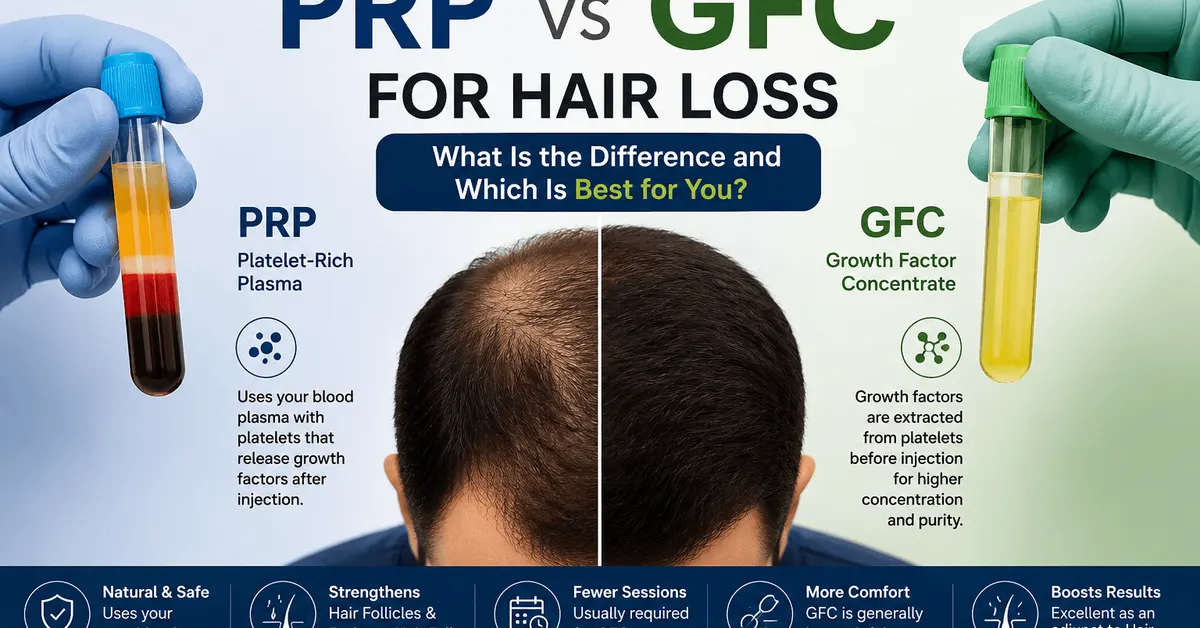
GFC is prepared from your own blood. After a small sample is taken, it is processed so that the growth factors found in platelets are concentrated and separated from other blood components. The preparation is then injected into the scalp. Growth factors are signalling proteins involved in tissue repair and cell activity, and the idea is that they may support weak or shrinking follicles. You can read how one clinic explains it on itsGFC hair treatment page.
How GFC Differs from PRP
Both treatments start with a blood sample, and both aim to support hair follicles. The difference lies mainly in preparation. GFC systems aim to concentrate growth factors, while PRP concentrates the platelets themselves. Some providers say GFC needs fewer sessions, but there is no firm evidence that it works better than PRP for everyone. The right option depends on your diagnosis, and a doctor may suggest one, the other or neither. This comparison ofGFC, exosome and QR678 looks at the differences in more detail.
How a GFC Session Works
- Consultation and scalp assessment to confirm the cause of your hair loss.
- A small blood sample taken from your arm.
- Processing to prepare the concentrate.
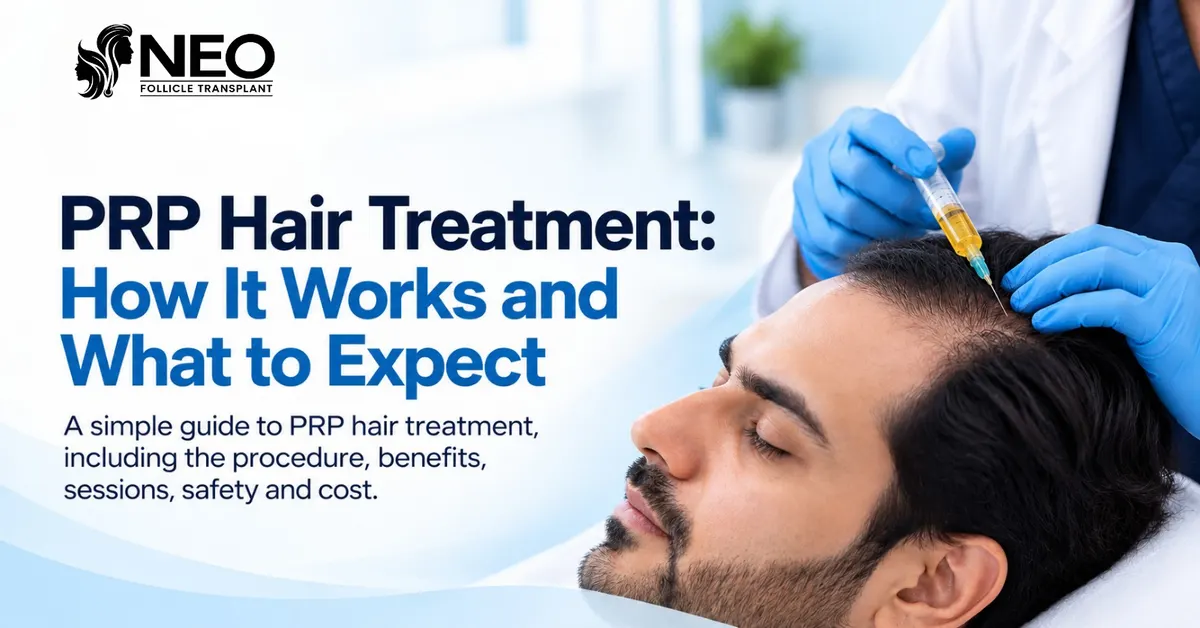
- Injection into thinning areas of the scalp, followed by aftercare advice.
Sessions are usually short, with little or no downtime. Mild redness or tenderness can follow, and your doctor will tell you when you can wash your hair and use styling products again.
Who May Benefit
GFC is generally considered for thinning, shedding or weakened hair where follicles are still active, such as early pattern hair loss. Men with early pattern thinning and women with diffuse thinning are typical examples, and blood tests may be advised first to rule out causes such as low iron or a thyroid problem. It is not suited to areas that are completely bald, where a transplant may be discussed instead. It can also be combined with other treatments, or used around a hair transplant as part of a wider hair restoration treatment plan, as your doctor decides. Some conditions need a different approach altogether, so diagnosis comes first.
Sessions, Results and Limits
GFC is usually given as a planned course, sometimes followed by maintenance, but the number of sessions depends on your hair loss and how you respond. As with any hair regrowth treatment, hair grows slowly, so any change is judged over months. Evidence for growth-factor and platelet-based treatments is still developing, and methods differ between studies, so results vary and cannot be guaranteed.
The cost of GFC treatment depends on the number of sessions, the extent of hair loss and whether it is combined with other treatments, so it is best discussed after an examination. If PRP is also being considered, the clinic'sPRP hair treatment page describes that option.
Questions to Ask Your Doctor
- What is my diagnosis, and what is causing my hair loss?
- Why GFC rather than PRP, medicines or no procedure?
- How many sessions are planned, and how will we review progress?
- What risks apply to me, given my health and medicines?
- What happens if I see little change?
The Science Behind Growth Factors
Growth factors are proteins that cells use to signal to one another during healing and tissue repair. Platelets contain several of them, and the idea behind GFC and PRP is that delivering a concentrated dose to the scalp may encourage follicles to stay in their growth phase for longer. This is a plausible mechanism, but plausible is not the same as proven for every person. Studies in this area use different methods, which is why results are hard to compare and why honest providers speak in terms of possible benefit rather than certainty.
What Results May Look Like
When treatment helps, people typically notice less shedding and slightly stronger or thicker-feeling hair over time. Changes are gradual and are judged over months, usually with photographs taken under the same conditions. Some people see little change, and in others the benefit fades if treatment stops. Your doctor may suggest reviewing progress at set points so that the plan can be adjusted or stopped if it is not helping.
Safety Considerations
GFC uses your own blood, so allergic reactions to the preparation are unlikely, but other reactions can occur. Soreness, swelling, bruising and, rarely, infection are possible. Tell your doctor about blood disorders, blood thinners, pregnancy, breastfeeding and any active scalp condition. The preparation should be made in clean conditions by trained staff using a system your doctor can explain.
Before and After Your Session
Before treatment, eat normally, stay hydrated and share a list of your medicines. Afterwards, expect some tenderness and possible redness. Follow your doctor's instructions about washing hair, exercise and sun exposure. If something feels wrong, such as increasing pain or fever, contact the clinic.
How to Compare Providers
Because GFC is offered in different ways, it helps to ask which system is used, who prepares and injects it, and how many sessions are expected. Be careful with providers who promise a result, quote a fixed outcome or push a package before examining you. A clear diagnosis, an explanation of alternatives and a plan to review progress are better signs of a sound approach.
GFC and Daily Hair Care
Whatever treatment you choose, daily care still matters. Use a gentle shampoo, avoid tight hairstyles and limit heat and chemical treatments. Eat a balanced diet and manage stress where you can. If your doctor has prescribed medicines, keep to them. Treatments such as GFC are meant to support the scalp, not to replace the basics of hair care.
Is GFC Worth Considering?
The honest answer is that it depends on your diagnosis, your goals and how much uncertainty you are comfortable with. For some people it is a reasonable option within a medical plan. For others, medicines alone, a different procedure or simply monitoring may be more suitable. A consultation that lays out all the options, including the option of doing nothing yet, is a good sign.
Choosing with the Right Information
GFC may be worth considering for selected people with thinning hair, but it is one option among several in hair loss treatment in Bangalore, and a proper diagnosis should come before any treatment. If you would like your own case assessed, you canarrange a consultation at Neo Follicle Hair Transplant Clinic in Marathahalli, Bangalore.
Medically reviewed under the guidance of Dr. Sandeep Mahapatra, MBBS, MD (Dermatology, Venereology & Leprosy), certified DHI specialist (DHI Global). Registration No.: [Registration No. – to be added]
Neo Follicle Hair Transplant Clinic · 1st Floor, Scorpio House, near Marathahalli Bridge, Bengaluru 560037 · Phone and WhatsApp: +91 97312 07940
This article is for general information and does not replace an in-person consultation. Suitability and results vary from person to person.
Frequently Asked Questions
1. Is GFC better than PRP?
Not necessarily. The two are related, and neither is proven better for everyone. Your diagnosis should guide the choice.
2. Is GFC treatment surgical?
No. It involves a blood draw and scalp injections, with no cuts or stitches.
3. Does GFC work for baldness?
It is meant for thinning hair where follicles are still active. It is not intended for completely bald areas.
4. Are there side effects?
Mild redness, soreness or swelling can occur and usually settles quickly. Rarely, infection is possible. Share your medical history with the doctor before treatment.
5. How soon will I see a difference?
Hair grows slowly. Any change is usually assessed over several months, and results differ from person to person.
Share this article :