Blog Summary: A receding hairline may need medical treatment first, and hair transplant only when hair loss is stable and donor planning is safe. Dr Sandeep Mahapatra, Hair Transplant Surgeon at Neo Follicle Hair Transplant Clinic in Bangalore, explains that early surgery on active hair loss can look unnatural. Start with expert evaluation and long-term planning.
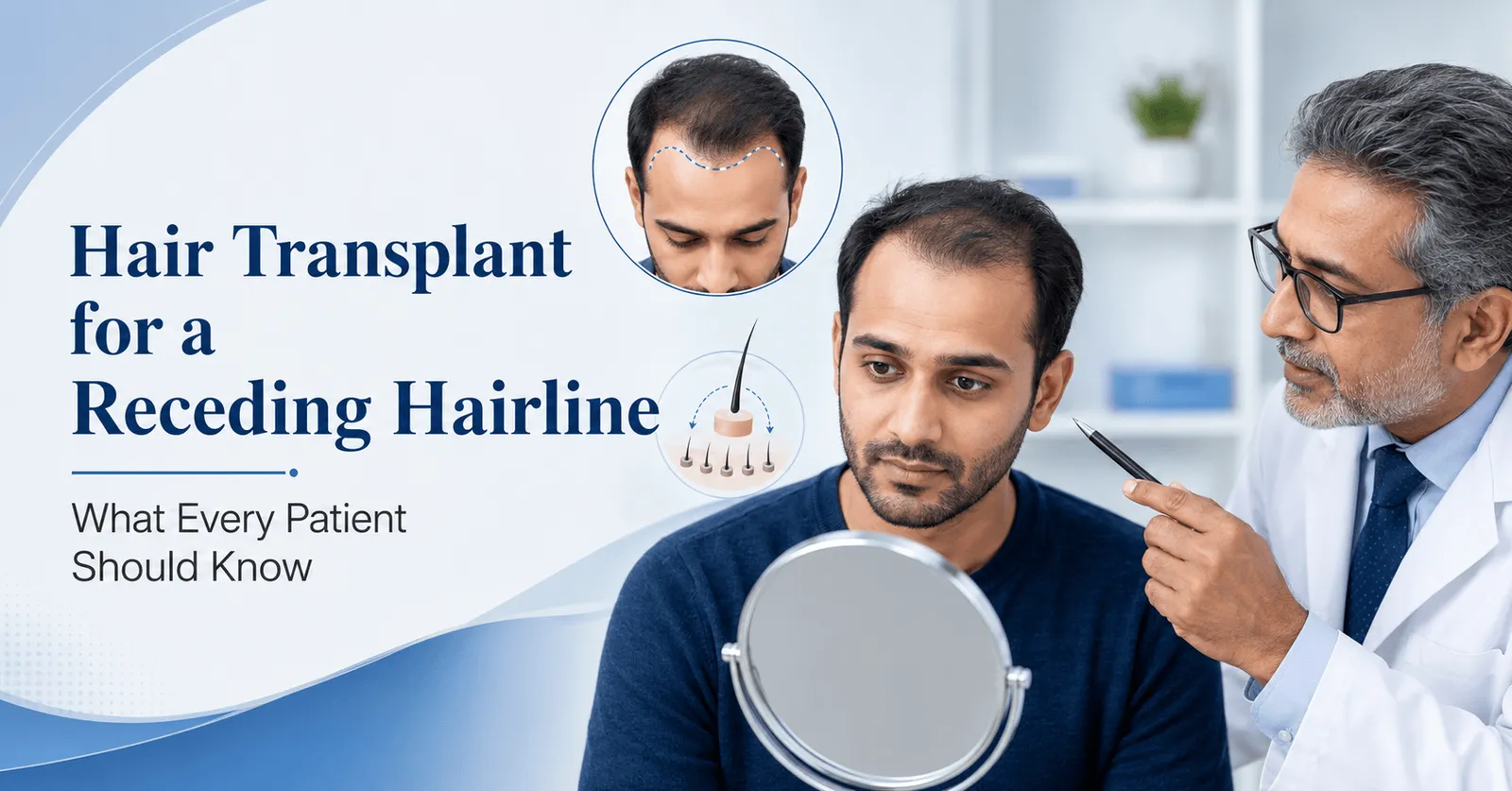
Introduction: Hair Transplant for a Receding Hairline
A receding hairline can feel deeply personal.
Many young men tell me the same thing.
“Doctor, I still feel young. But my hairline makes me look older.”
Some notice it in selfies.
Some notice it during video calls.
Some notice it under harsh office lights.
Some avoid certain hairstyles altogether.
At Neo Follicle Hair Transplant Clinic in Marathahalli, Bangalore, I meet many young software engineers, entrepreneurs, corporate leaders, and professionals from Whitefield, Bellandur, Sarjapur Road, Electronic City, Indiranagar, Koramangala, and HSR Layout.
Many are successful.
Many are confident at work.
But their hairline quietly affects them.
They say, “I look tired.”
Or, “I look older than I feel.”
Or, “My forehead looks bigger now.”
I understand this concern.
But I also tell every patient one thing.
A hairline transplant is not just about filling corners.
It is about planning your future hair loss.
That is why timing matters.
Design matters.
Medical stabilization matters.
Let me explain this clearly.
What Is a Receding Hairline?
A receding hairline usually starts at the temples.
The front corners move backward.
The forehead appears wider.
The hairline loses its youthful curve.
This is often part of male pattern hair loss.
It may start in the early 20s.
Sometimes even earlier.
But every receding hairline is different.
Some men have only mild temple recession.
Some have deep M-shaped recession.
Some also have frontal thinning.
Some have crown thinning too.
This is why consultation is important.
I never look only at the front.
I check the full scalp.
I check the donor area.
I check family history.
I check hair thickness.
I check miniaturization.
I check progression speed.
Only then can we decide.
Medicine first?
Surgery later?
Or a combined plan?
The Big Question: Am I Too Young?
This is the most common question.
“Doctor, am I too young for a hair transplant?”
My honest answer is this.
Age alone is not the deciding factor.
Stability is more important.
A 25-year-old with stable hair loss may be suitable.
A 32-year-old with rapid loss may not be ready.
What matters is the pattern.
Is the hairline still moving?
Is the frontal hair still thinning?
Is the crown also opening?
Is there strong family history?
Is the donor area strong enough?
If the hair loss is active, we must pause.
Not ignore it.
Not rush surgery.
Not overpromise results.
We first stabilize the hair loss.
This is where ethical planning matters.
Why Operating Too Early Can Be Risky
A transplanted hairline usually stays.
But your native hair may continue thinning.
This creates a problem.
Imagine we create a sharp new hairline today.
But the hair behind it keeps receding.
After a few years, the transplanted hair may remain in front.
The natural hair behind it may disappear.
This can create an unnatural “island” effect.
The front hairline stays.
But the middle becomes thin.
That looks artificial.
This is why I am careful with young patients.
A quick transplant may look good initially.
But poor planning can age badly.
Hair transplant planning must consider 10 years.
Not just 10 months.
Medical Management Comes First in Many Young Men
Not every receding hairline needs immediate surgery.
In early cases, medical management may help.
It may slow progression.
It may thicken miniaturized hair.
It may improve density.
It may protect future results.
Common options may include:
- Dermatologist-guided DHT blockers
- Topical or oral hair growth medicines
- PRP or GFC therapies
- Anti-dandruff scalp care
- Nutritional correction
- Lifestyle and stress management
These treatments do not create a new hairline.
But they may protect existing hair.
That protection is very important.
Especially for young men.
At Neo Follicle Clinic, my goal is not to push surgery.
My goal is to preserve your hair first.
If medicines can delay surgery, we discuss that.
If surgery is needed, we plan it carefully.
When Is a Hairline Transplant Actually Needed?
A transplant becomes useful when hairline loss is visible.
Especially when the temples have clearly receded.
It is also useful when frontal density is poor.
But the decision should be based on proper evaluation.
Signs You May Be Ready
You may be ready if:
- Your hairline has visibly receded.
- The corners look empty.
- Your hair loss has slowed.
- Medical therapy is already started.
- Your donor area is strong.
- Your expectations are realistic.
- You accept future planning.
- You do not demand an extremely low hairline.
This last point is very important.
A good transplant is not just dense.
It must look natural for life.
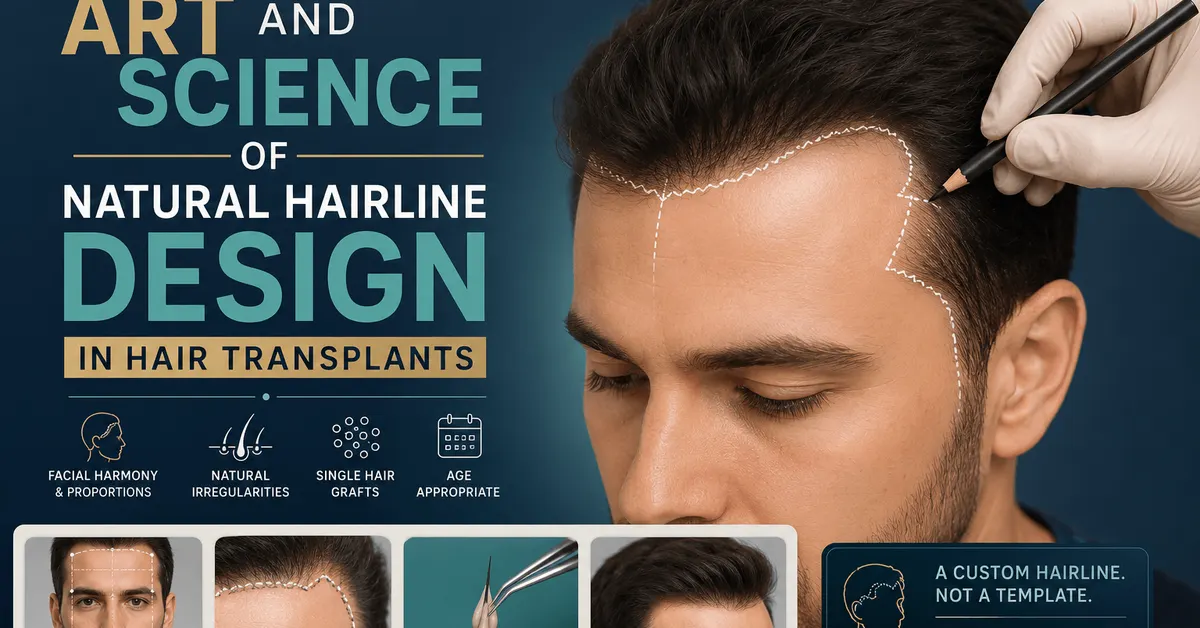
The Art of Natural Hairline Design
Hairline design is where science meets art.
This is one of my special interests.
A natural hairline is never laser-straight.
It should not look drawn with a ruler.
Real hairlines have softness.
They have irregularity.
They have transition.
They have age-appropriate shape.
A teenage hairline may look tempting.
But it may not suit you at 35.
It may look odd at 45.
It may look artificial later.
That is why I prefer a mature hairline.
Not an old-looking hairline.
A mature hairline means balance.
It respects your face.
It respects your age.
It respects future hair loss.
It respects donor hair limits.
At Neo Follicle Clinic, we study:
- Forehead height
- Facial proportions
- Temple angles
- Hair direction
- Hair calibre
- Existing density
- Future balding risk
- Donor reserve
The best hairline is not the lowest hairline.
It is the most natural one.
Why Aggressively Low Hairlines Are Dangerous
I want to strongly caution you here.
Be careful with clinics that say yes immediately.
Especially if you are 20 or 21.
Be careful if someone promises a celebrity hairline.
Be careful if someone draws it too low.
Be careful if price is the only conversation.
Be careful if no one discusses future hair loss.
A young patient may feel happy initially.
But an aggressively low hairline consumes many grafts.
Those grafts come from the donor area.
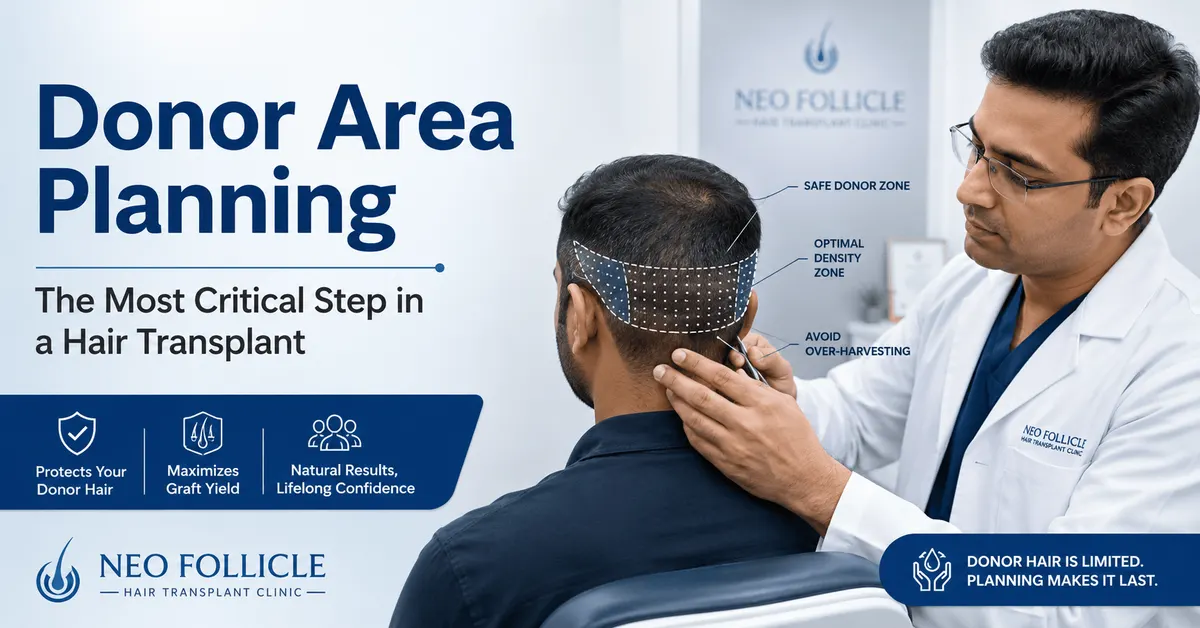
The donor area is limited.
Once used, it cannot be fully replaced.
If future hair loss progresses, you may need more grafts.
But if too many grafts were wasted early, options reduce.
That is why donor hair is precious.
I treat donor hair like a lifetime resource.
It must be used wisely.
Not emotionally.
Not commercially.
Not carelessly.
FUE, DHI, and High-Density Hairline Restoration
For receding hairlines, density matters.
The front hairline is highly visible.
Even small mistakes show.
We usually use refined FUE techniques.
In suitable cases, direct implanter-based implantation may help.
Some people call this DHI.
The goal is precise placement.
Angle matters.
Depth matters.
Direction matters.
Spacing matters.
Single-hair grafts matter.
The front row must use fine single grafts.
This creates softness.
Behind that, density can be built.
This gives a natural frontal frame.
A good hairline should not shout, “Transplant.”
It should simply look like you.
The Best Results Often Come From Combination Treatment
Many young men need both approaches.
Not surgery alone.
Not medicine alone.
The best plan may include:
- Medical stabilization first
- GFC or PRP for thinning zones
- Conservative hairline restoration
- High-density frontal packing
- Long-term maintenance
- Regular follow-up
This combination works well.
Especially for early-to-mid frontal thinning.
Surgery restores the lost line.
Medicine protects existing hair.
GFC or PRP may support weak follicles.
Together, they give better longevity.
This is what I call strategic restoration.
Not a one-day cosmetic fix.
Bangalore Professionals and Hairline Confidence
In Bangalore, appearance pressure is real.
Many patients work in high-visibility roles.
They attend client meetings.
They lead teams.
They appear on video calls.
They present to global teams.
I see this often with professionals from Whitefield, Bellandur, Electronic City, Sarjapur Road, Indiranagar, Koramangala, and HSR Layout.
They are not vain.
They simply want to look like themselves again.
A receding hairline can make them feel older.
A natural restoration can restore facial balance.
But the goal must be subtle.
Not obvious.
Not exaggerated.
Not overdone.
That is the difference between treatment and transformation.
What Happens During Consultation at Neo Follicle?
I start with listening.
I ask what bothers you most.
Then I examine your scalp.
We assess the hairline.
We assess density.
We assess miniaturization.
We assess donor strength.
We assess future risk.
Then we discuss options.
Sometimes I advise medicine first.
Sometimes I advise waiting.
Sometimes I advise a small, conservative transplant.
Sometimes I advise combined treatment.
My team and I explain everything clearly.
No pressure.
No fear-based selling.
No unrealistic promises.
A good clinic should protect you.
Not just book you.
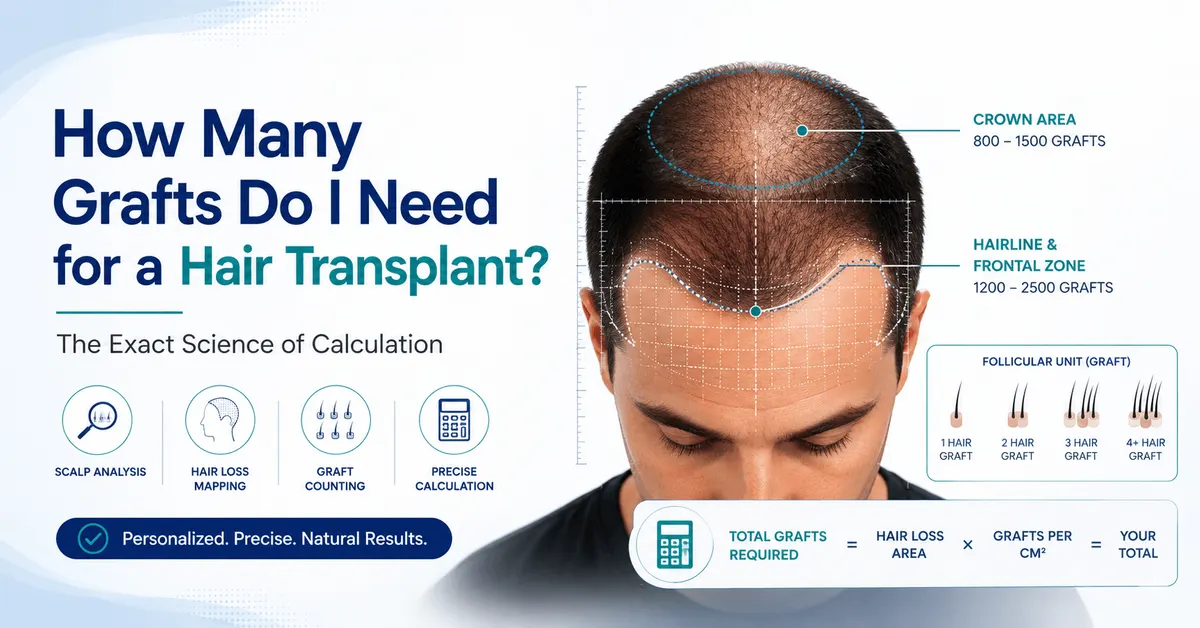
How Many Grafts Are Needed?
This depends on recession severity.
Mild temple correction may need fewer grafts.
Deep recession needs more.
Frontal density packing needs careful planning.
Many receding hairline cases may require around 1,000 to 2,500 grafts.
Some may need more.
Some may need less.
But graft number should never be guessed casually.
It depends on:
- Area to cover
- Hair thickness
- Desired density
- Existing hair
- Donor availability
- Future hair loss risk
- Hairline design
I always prefer planning over overharvesting.
More grafts are not always better.
Better placement is better.
My Advice to Young Men With Receding Hairlines
Do not panic.
Do not rush.
Do not compare yourself with others.
Do not chase the lowest hairline.
Get properly evaluated.
Start treatment early.
Track progression with photos.
Understand your family history.
Think long term.
A receding hairline can be treated.
But it must be treated wisely.
The best result is not just hair growth.
It is a natural look that lasts.
FAQs About Hair Transplant for a Receding Hairline
What is the ideal age to get a hair transplant for a receding hairline?
There is no single ideal age.
The better question is this.
Is your hair loss stable?
Many patients become suitable in their mid-to-late 20s.
Some may be ready earlier.
Some should wait longer.
If you are very young and actively receding, I usually recommend medical stabilization first.
Surgery should be planned only after proper evaluation.
Will my hair continue to recede behind the newly transplanted hairline?
It can happen.
Transplanted hair usually remains.
But your native hair may continue thinning.
That is why medical treatment is important.
Without stabilization, the hair behind the transplant may recede.
This can create an unnatural gap.
A good plan protects both transplanted and existing hair.
How many grafts are typically required to lower or density-pack a receding hairline?
Most cases need careful customization.
Mild recession may need around 1,000 grafts.
Moderate recession may need 1,500 to 2,500 grafts.
Higher numbers may be needed in larger areas.
But graft count depends on your design.
It also depends on hair thickness and donor quality.
I never recommend graft numbers without scalp evaluation.
Can advanced non-surgical treatments like GFC fix a receding hairline without surgery?
GFC can help weak or thinning hair.
It may improve hair quality.
It may reduce shedding.
It may support early thinning areas.
But it usually cannot recreate a lost hairline.
If the temples are empty, surgery may be needed.
In many patients, the best plan is combined.
GFC or PRP protects existing hair.
Transplant restores the lost frontal frame.
Final Thoughts
A receding hairline is treatable.
But timing is everything.
A rushed transplant can create future problems.
A planned transplant can restore confidence naturally.
At Neo Follicle Hair Transplant Clinic in Marathahalli, Bangalore, my approach is simple.
Stabilize first.
Design carefully.
Use donor hair wisely.
Create natural density.
Think long term.
Your hairline should suit your face today.
It should also age gracefully tomorrow.
That is the real goal.
Blog Author & Medical Reviewer

Written by: Dr. Sandeep Mahapatra
Senior Dermatologist, Hair Transplant Surgeon & Founder – Neo Follicle Hair Transplant Clinic, Bangalore
Dr. Sandeep Mahapatra is a senior dermatologist and hair transplant surgeon in Bangalore with extensive experience in hair restoration, dermatology, and aesthetic treatments. As the founder of Neo Follicle Hair Transplant Clinic, he has successfully performed over 10,000 hair transplant procedures and regularly guides patients on safe, ethical, and natural-looking hair restoration.
Medically reviewed by: Dr. Sandeep Mahapatra
Senior Dermatologist & Hair Transplant Surgeon
Date Reviewed: 2026-06-25
This article has been medically reviewed by Dr. Sandeep Mahapatra to ensure that the information is clinically accurate, patient-friendly, and aligned with safe hair transplant practices. The content is intended for educational purposes and should not replace a personal consultation with a qualified hair transplant surgeon.
References:
- NCBI / StatPearls – Hair Transplantation
URL: https://www.ncbi.nlm.nih.gov/books/NBK547740/ - NCBI / StatPearls – Androgenetic Alopecia
URL: https://www.ncbi.nlm.nih.gov/books/NBK430924/ - PMC / NIH – Treatment of Androgenetic Alopecia: Current Guidance and Unmet Needs
URL: https://pmc.ncbi.nlm.nih.gov/articles/PMC10239632/ - MedlinePlus Genetics – Androgenetic Alopecia
URL: https://medlineplus.gov/genetics/condition/androgenetic-alopecia/ - PubMed – Platelet-Rich Plasma for Androgenetic Alopecia
URL: https://pubmed.ncbi.nlm.nih.gov/37533146/
Share this article :