Blog Summary: Female hair loss is common, medically understandable, and often controllable once the root cause is diagnosed. Widening part lines, PCOS, thyroid imbalance, stress and nutritional deficiencies all present differently. At Neo Follicle Hair Transplant Clinic in Bangalore, Dr Sandeep Mahapatra diagnoses before treating.
Hair loss in women is not “just a cosmetic problem.”
As a dermatologist and hair transplant surgeon, I have met many women who walk into my consultation room with a quiet fear in their eyes. Some come from Marathahalli and Whitefield after a long workday. Some come from Electronic City, Bellandur, HSR Layout, Indiranagar, Koramangala, Jayanagar, and other parts of Bangalore.
Many have already tried shampoos, oils, supplements, salon treatments, and home remedies before finally deciding to seek medical help.
But when they sit across from me, the concern is often the same.
“Doctor, why is my hair thinning?”
“Will I lose all my hair?”
“Is this because of PCOS?”
“Can I ever get my old density back?”
“Do I need a hair transplant?”
I want to begin with reassurance.
Female hair loss is common. It is medically understandable. And in many cases, it can be controlled, improved, or reversed when the root cause is correctly diagnosed.
At Neo Follicle Hair Transplant Clinic in Bangalore, my team and I never look at female hair loss as one simple problem with one standard treatment. Women’s hair thinning is usually multi-factorial. That means several internal and external factors may be acting together.
The right treatment begins with the right diagnosis.
Not with a shampoo.
Not with a salon package.
Not with random biotin gummies.
Not with a treatment suggested online.
It begins with understanding your scalp, your hair cycle, your hormones, your nutrition, your stress levels, your medical history, and your pattern of thinning.
That is the purpose of this article.
I want to help you understand female hair loss with clarity, compassion, and medical honesty.
Female Hair Loss Is Emotionally Heavy - And That Deserves Respect
For many women, hair is closely connected to confidence, femininity, identity, and self-expression.
So when hair starts falling in clumps, when the parting line becomes wider, when the ponytail feels thinner, or when the scalp starts showing under bright light, it can feel frightening.
Many women silently suffer because of social stigma.
They may hear comments like:
- “You are thinking too much.”
- “It is just stress.”
- “Use this oil.”
- “Don’t wash your hair often.”
- “All women lose hair after pregnancy.”
- “It will settle on its own.”
Sometimes it does settle.
But sometimes it does not.
And when hair loss continues for months, dismissing it can delay proper diagnosis.
I always tell my patients this: your concern is valid. You are not being vain. You are not overreacting. Hair loss can affect emotional well-being, and it deserves medical attention.
How Female Hair Loss Is Different From Male Pattern Baldness
Female hair loss usually does not look like male baldness.
In men, androgenetic alopecia often appears as:
- A receding hairline
- Deep temple recession
- Crown baldness
- Gradual formation of bald patches
In women, the pattern is usually different.
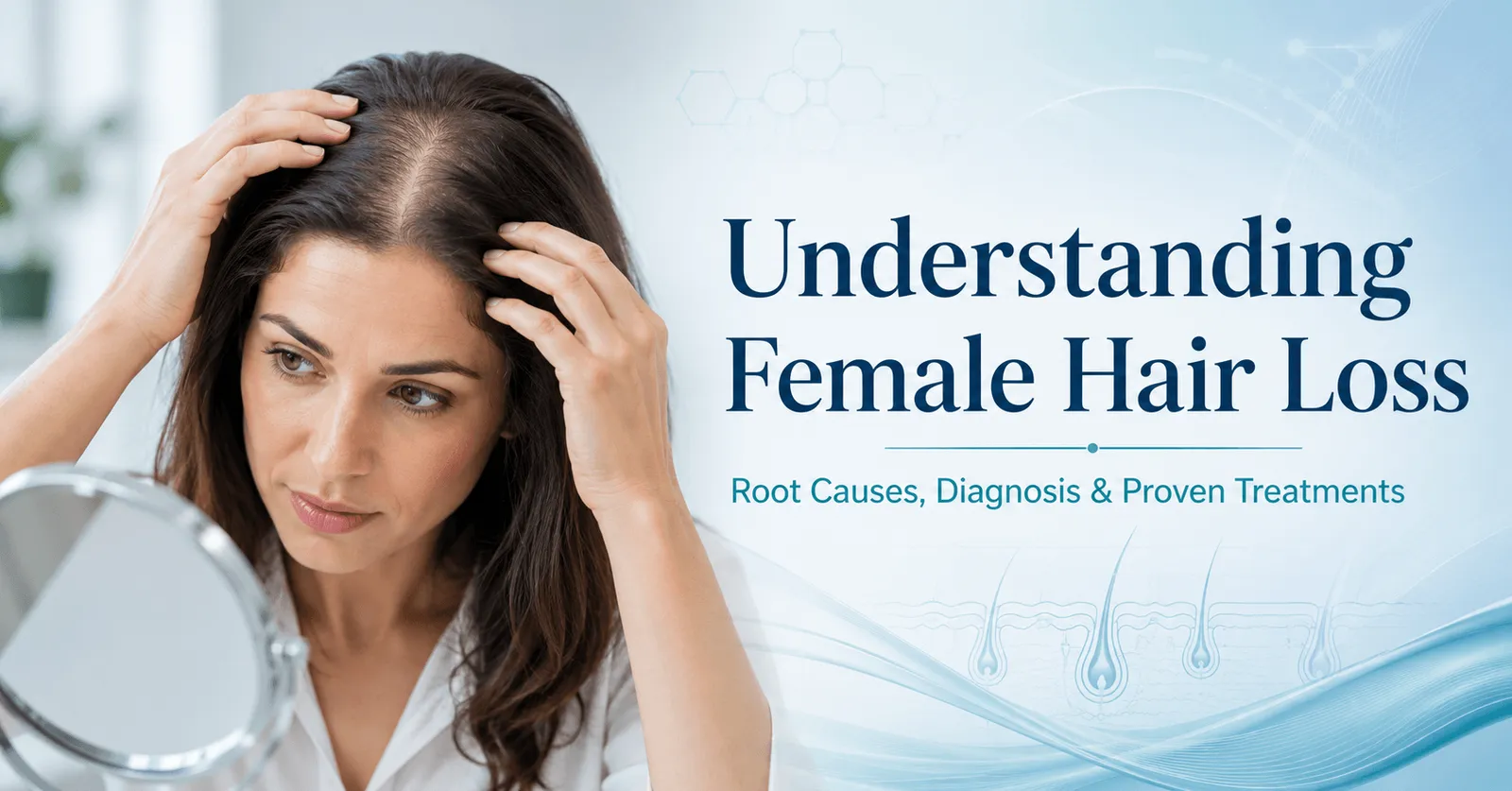
Most women do not develop a completely receding frontal hairline. Instead, they notice:
- Diffuse thinning over the crown
- A widening centre parting
- Reduced ponytail volume
- More scalp visibility
- Thinning behind the frontal hairline
- Hair fall while combing, washing, or drying
- Loss of density rather than complete bald patches
This pattern is often assessed using the Ludwig Scale, which helps classify female pattern hair loss from mild to advanced thinning.
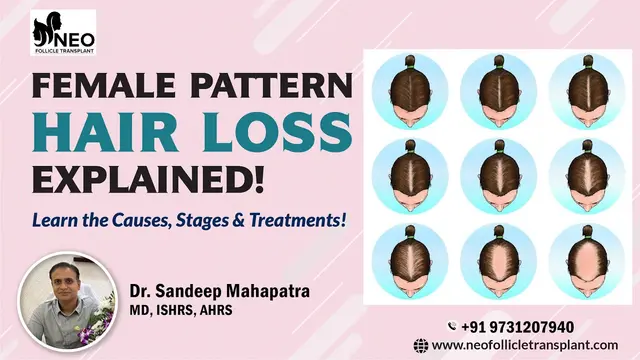
Common Female Hair Loss Pattern
In many women, the front hairline remains relatively preserved, but the area just behind it becomes thinner. The scalp becomes more visible when the hair is parted. Over time, the parting line may look wider.
This is why many women say:
“Doctor, my hairline is still there, but the top has become very thin.”
This is a classic presentation of female pattern hair loss.
Why Female Hair Loss Is Usually Multi-Factorial
One of the biggest mistakes in treating female hair loss is assuming there is only one cause.
In reality, several factors may overlap.
A woman may have mild female pattern hair loss, low ferritin, vitamin D deficiency, PCOS, thyroid imbalance, and high stress - all at the same time.
That is why the treatment cannot be generic.
A 24-year-old woman with PCOS-related thinning needs a different plan from a 38-year-old woman with postpartum shedding. A 50-year-old woman entering menopause needs a different evaluation from a young professional in Whitefield or Bellandur struggling with stress-related telogen effluvium.
At Neo Follicle, we focus on root-cause diagnosis before recommending treatment.
Let us understand the major causes.
1. Female Pattern Hair Loss or Androgenetic Alopecia
Female Pattern Hair Loss, also called androgenetic alopecia, is one of the most common causes of progressive hair thinning in women.
It happens when genetically sensitive hair follicles gradually become thinner over time. This process is called miniaturization.
The hair does not disappear suddenly. Instead, thick terminal hair slowly becomes thinner, shorter, and weaker.
Common Signs of Female Pattern Hair Loss
You may notice:
- Widening centre parting
- Reduced density over the crown
- Thinner ponytail
- More scalp visibility under light
- Gradual progression over months or years
- Family history of hair thinning
- Hair that feels finer than before
Is It Always Due to High Androgens?
Not always.
Some women with female pattern hair loss have normal hormone reports. Their follicles may simply be more sensitive to normal hormone levels.
In other women, androgen excess due to PCOS or hormonal imbalance may accelerate thinning.
This is why proper evaluation is important.
2. Telogen Effluvium: Sudden Shedding After Stress or Body Shock
Telogen Effluvium is a very common cause of increased hair shedding in women.
It happens when a large number of hair follicles shift from the growing phase into the resting and shedding phase.
This usually occurs 2 to 3 months after a trigger.
Common Triggers for Telogen Effluvium
Triggers may include:
- Severe emotional stress
- Fever or infection
- Dengue, typhoid, COVID, or other illnesses
- Major weight loss
- Crash dieting
- Surgery
- Childbirth
- Sleep deprivation
- Work pressure
- Nutritional deficiency
- Thyroid imbalance
- Certain medications
Many working women and young professionals coming to our Marathahalli clinic from IT hubs like Whitefield, Bellandur, Electronic City, and HSR Layout often ask me if corporate stress and Bangalore’s lifestyle are worsening their hair fall.
The honest answer is this: stress alone may not be the only cause, but chronic stress can disturb the hair cycle, sleep, nutrition, hormones, and inflammation. So it can definitely contribute.
Is Telogen Effluvium Permanent?
Usually, no.
Telogen effluvium is often reversible once the trigger is identified and corrected. But if it continues for more than 6 months, or if it overlaps with female pattern hair loss, it needs deeper evaluation.
3. PCOS-Related Hair Loss
PCOS, or Polycystic Ovary Syndrome, is a common hormonal condition that can affect hair growth.
In PCOS, some women have higher androgen activity. This can cause:
- Scalp hair thinning
- Acne
- Irregular periods
- Facial hair growth
- Weight gain or difficulty losing weight
- Oily scalp
- Increased shedding
PCOS-related hair thinning often appears like female pattern hair loss, especially over the crown and parting line.
Does PCOS Mean You Will Go Bald?
No.
This is one of the biggest fears women have.
PCOS-related hair loss does not mean you will go completely bald. But it can progress if the hormonal imbalance is not managed.
The treatment usually needs a combined approach involving:
- Dermatology evaluation
- Hormonal assessment
- Lifestyle correction
- Weight and insulin resistance management if needed
- Medical therapy
- Scalp-focused regenerative treatments when suitable
The earlier we treat it, the better the chance of preserving density.
4. Thyroid Imbalance and Hair Loss
Both hypothyroidism and hyperthyroidism can contribute to hair shedding.
Thyroid hormones are important for metabolism, energy, skin health, and the hair growth cycle.
When thyroid levels are abnormal, hair may become:
- Dry
- Brittle
- Thin
- Weak
- Excessively shedding
Sometimes, women continue using external treatments while the real issue is an undiagnosed thyroid imbalance.
This is why a thyroid profile is often part of the basic workup for female hair loss.
5. Pregnancy, Postpartum Shedding, and Breastfeeding
Many women experience thick, beautiful hair during pregnancy because hormonal changes keep more hair in the growing phase.
After delivery, hormones shift again. This can push many hairs into the shedding phase.
Postpartum shedding usually starts around 2 to 4 months after childbirth.
It can feel dramatic.
Women may see hair on the pillow, bathroom floor, comb, and while washing. This can be emotionally overwhelming, especially when the mother is already dealing with sleep deprivation and physical recovery.
Is Postpartum Hair Loss Permanent?
In most cases, no.
Postpartum shedding is usually temporary. But if it continues, or if the hair density does not recover after several months, we need to check for:
- Iron deficiency
- Vitamin D deficiency
- Thyroid imbalance
- Nutritional depletion
- Female pattern hair loss that may have become visible after delivery
6. Menopause and Perimenopause
During perimenopause and menopause, estrogen levels decline. This can change the balance of hormones affecting the hair follicle.
Women may notice:
- Gradual thinning
- Dryness of hair
- Reduced volume
- Slower growth
- Increased scalp visibility
- Thinning near the frontal and crown areas
Menopause-related hair thinning is treatable, but the goals must be realistic.
The focus is to stabilize hair loss, improve quality, increase density where possible, and prevent further miniaturization.
7. Nutritional Deficiencies: Iron, Vitamin D, B12, Protein
Hair is a fast-growing tissue. It needs adequate nutrition.
In Bangalore, I commonly see young women with hair fall who are otherwise active and educated but nutritionally depleted due to irregular meals, long commutes, dieting, vegetarian diets without proper planning, low protein intake, or chronic stress.
Important Nutrients for Hair Health
Key nutrients include:
- Iron
- Ferritin
- Vitamin D
- Vitamin B12
- Protein
- Zinc
- Folate
- Essential fatty acids
Among these, ferritin, vitamin D, and B12 are commonly checked in women with diffuse hair loss.
Why Ferritin Matters
Ferritin reflects iron storage in the body.
A woman may have a haemoglobin level that looks “normal,” but ferritin may still be low. Low ferritin can contribute to shedding and poor hair regrowth.
This is why we do not look only at haemoglobin.
We look deeper.
8. Lifestyle Stress, Sleep, Diet, and Bangalore’s Urban Routine
Hair loss is not caused only by one stressful week. But chronic lifestyle imbalance can affect the hair cycle.
Many women from Koramangala, Indiranagar, Bellandur, Whitefield, Electronic City, HSR Layout, and Marathahalli tell me similar stories:
- Long work hours
- Irregular meals
- Late-night screen time
- Poor sleep
- High-pressure jobs
- Frequent food ordering
- Low sunlight exposure
- Sedentary lifestyle
- Sudden weight gain or weight loss
- Anxiety and burnout
These factors can worsen shedding, trigger telogen effluvium, and aggravate underlying female pattern hair loss.
Bangalore’s water quality is also a frequent concern. Hard water may make hair feel rough, dry, and frizzy. It may increase breakage in some women. But true hair thinning from the root usually needs medical evaluation.
Hard water may affect hair texture.
But it is rarely the only cause of ongoing scalp-level thinning.
Why Diagnosis Must Come Before Treatment
This is the most important section of this article.
Female hair loss should never be treated blindly.
Before starting PRP, GFC, medicines, supplements, or transplant planning, we must first answer:
- What type of hair loss is this?
- Is it shedding, thinning, breakage, or scarring?
- Is the hair follicle miniaturizing?
- Is the donor area stable?
- Is there inflammation?
- Are hormones involved?
- Are nutritional deficiencies present?
- Is there thyroid imbalance?
- Is PCOS contributing?
- Is stress triggering telogen effluvium?
- Is there an autoimmune condition?
- Is the hair loss temporary or progressive?
Without diagnosis, treatment becomes guesswork.
And women often lose precious time.
The Role of Trichoscopy in Female Hair Loss
Trichoscopy is a scalp and hair examination done using magnification.
It helps us see what the naked eye cannot.
With trichoscopy, we can assess:
- Hair shaft thickness
- Miniaturization
- Follicular units
- Scalp inflammation
- Hair density
- Empty follicles
- Pattern of thinning
- Signs of scarring alopecia
- Variation in hair diameter
This is extremely useful in distinguishing female pattern hair loss from telogen effluvium, alopecia areata, traction alopecia, and other scalp conditions.
At Neo Follicle, trichoscopy helps us design a treatment plan based on evidence, not assumptions.
Basic Blood Tests Often Needed in Female Hair Loss
The exact tests depend on your symptoms, age, menstrual history, medical background, and clinical examination.
But commonly advised tests may include:
- Complete Blood Count
- Serum Ferritin
- Serum Iron Profile
- Vitamin D
- Vitamin B12
- Thyroid Profile
- Fasting Blood Sugar
- HbA1c
- Hormonal profile if PCOS is suspected
- Testosterone and androgen markers when needed
- Prolactin if clinically indicated
- Other tests depending on history
Please do not self-diagnose based only on online lists.
Tests should be interpreted clinically. A “normal” lab value may not always mean it is optimal for hair growth.
Treatment Options for Female Hair Loss
The treatment depends on the cause.
There is no single best treatment for all women.
At Neo Follicle Clinic, we usually create a customized plan that may include medical management, correction of deficiencies, scalp therapies, regenerative treatments, and in selected cases, surgical restoration.
1. Medical Management
Medical treatment is often the foundation.
Depending on diagnosis, it may include:
- Topical hair growth solutions
- Anti-inflammatory scalp treatment
- Anti-dandruff or seborrheic dermatitis treatment
- Nutritional correction
- Hormonal regulation
- PCOS management support
- Thyroid correction through the appropriate physician
- Lifestyle and diet guidance
Topical Solutions
Topical solutions may help improve hair density and reduce miniaturization in suitable cases.
However, they must be used correctly.
Some women stop too early because they expect results in a few weeks. Hair biology takes time. Most medical treatments need several months of consistent use.
Hormonal Regulation
In women with PCOS or androgen excess, hormonal management may be important.
This must be done carefully and medically. It is not something to start without proper evaluation.
2. PRP Therapy for Women
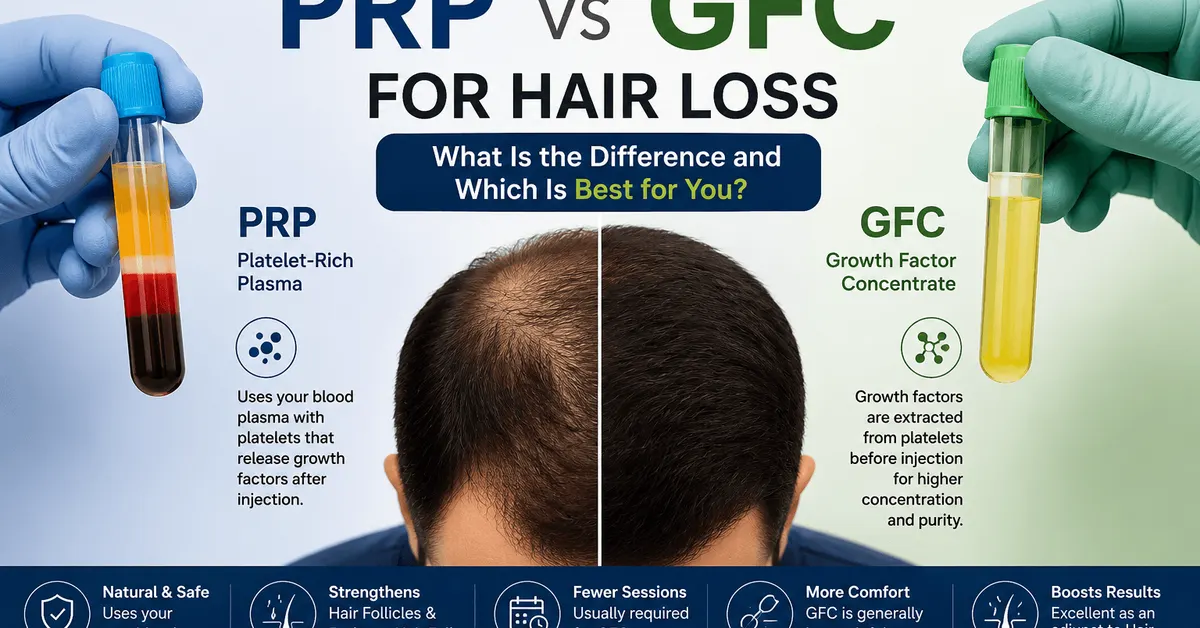
PRP stands for Platelet-Rich Plasma.
It is a regenerative therapy where a small amount of your blood is processed to concentrate platelets, which are then injected into the scalp.
PRP may help:
- Improve hair thickness
- Support weak follicles
- Reduce shedding in selected cases
- Improve scalp environment
- Support early female pattern hair loss
PRP is not a magic treatment. It works best when the diagnosis is correct and underlying deficiencies or hormonal issues are also addressed.
3. GFC Therapy for Women
GFC stands for Growth Factor Concentrate.
It is an advanced regenerative treatment where growth factors from your blood are concentrated and delivered into the scalp.
In suitable women, GFC may help improve:
- Hair density
- Hair shaft thickness
- Parting line appearance
- Scalp coverage
- Follicle strength
Many women ask me whether GFC is safe. Since it is prepared from the patient’s own blood, it is generally considered safe when performed under sterile medical conditions by trained professionals.
But again, patient selection matters.
GFC should not be sold as a universal solution for every type of hair loss.
It is most useful when follicles are still alive but weak or miniaturized.
4. Correcting Deficiencies
If a woman has low ferritin, vitamin D, B12, or protein intake, no external therapy can give ideal results unless the deficiency is corrected.
Hair requires internal support.
This may include:
- Iron supplementation when indicated
- Vitamin D correction
- B12 supplementation
- Protein optimization
- Diet planning
- Addressing heavy menstrual bleeding if present
- Treating gut absorption issues if suspected
Supplements should be based on need, not marketing.
5. Lifestyle Support
Lifestyle alone may not reverse genetic hair loss. But it can significantly improve treatment response.
Important steps include:
- Regular sleep
- Protein-rich meals
- Stress management
- Avoiding crash diets
- Managing PCOS and insulin resistance
- Gentle hair care
- Avoiding tight hairstyles
- Avoiding excessive heat styling
- Treating dandruff or scalp inflammation
- Reducing smoking and alcohol if relevant
A healthy scalp and body create a better environment for hair recovery.
When Is Hair Transplant an Option for Women?
Not every woman with hair loss is a candidate for hair transplant.
This is very important.
Hair transplant works best when:
- The donor area is stable
- The hair loss pattern is clear
- Medical causes are corrected
- There is sufficient donor hair
- Expectations are realistic
- The thinning area can be safely restored
- There is no active uncontrolled shedding
Suitable Female Hair Transplant Cases May Include
Women may benefit from hair transplant in cases such as:
- Naturally high forehead correction
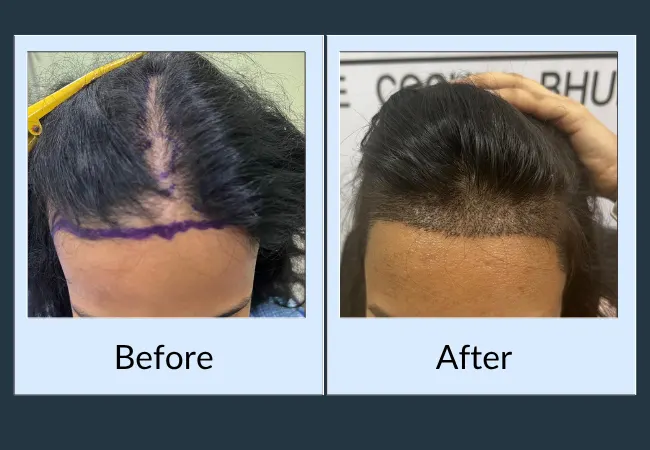
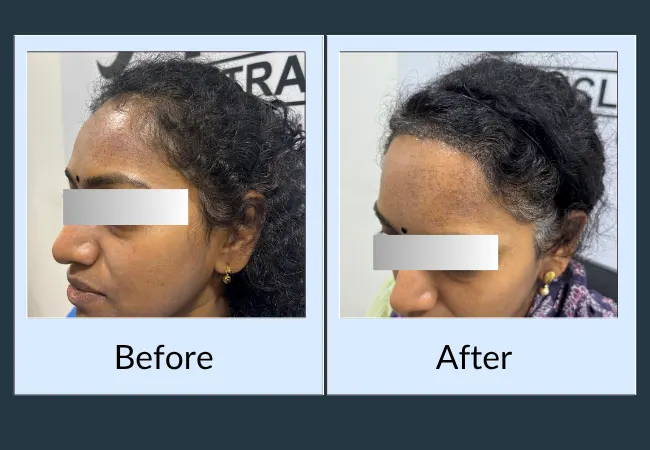
- Lowering or improving the frontal hairline
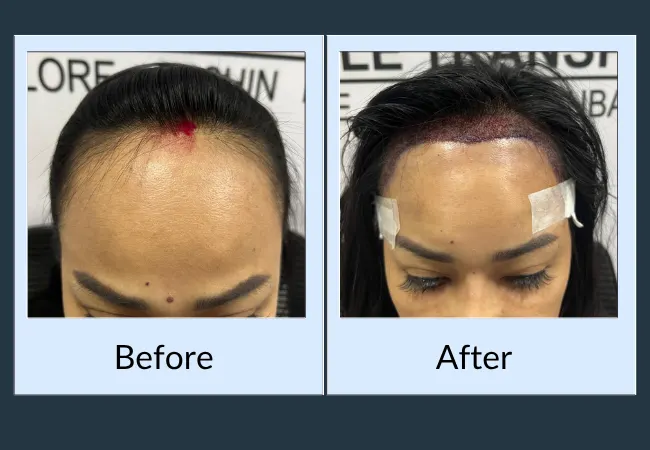
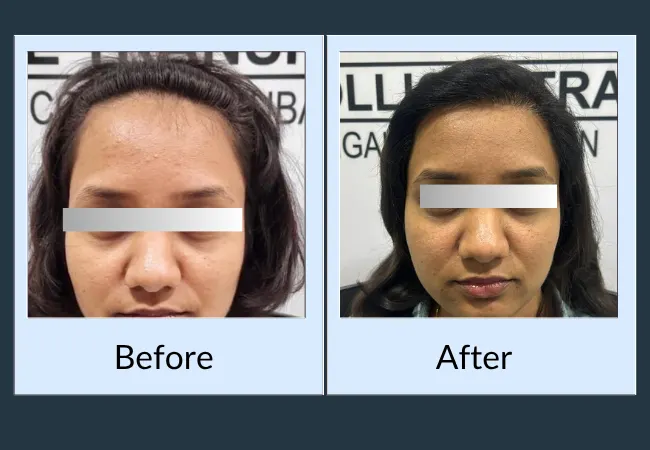
- Face-framing hair restoration
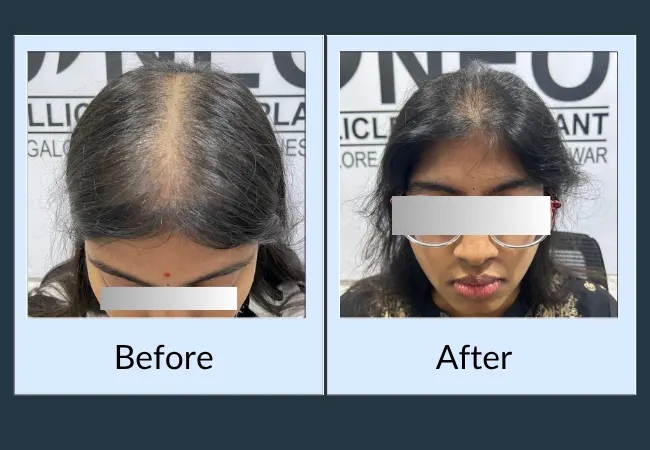
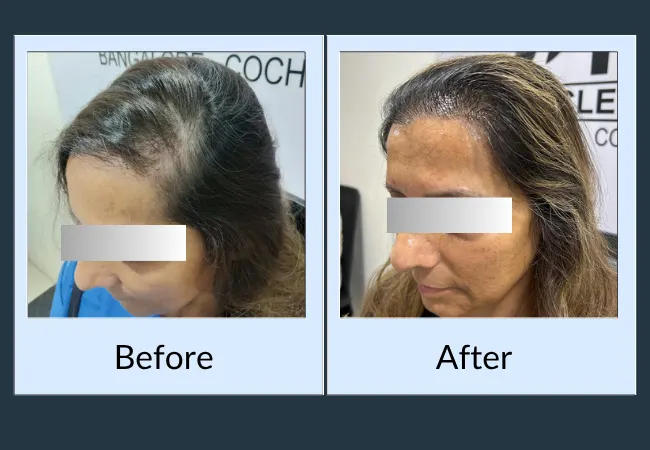
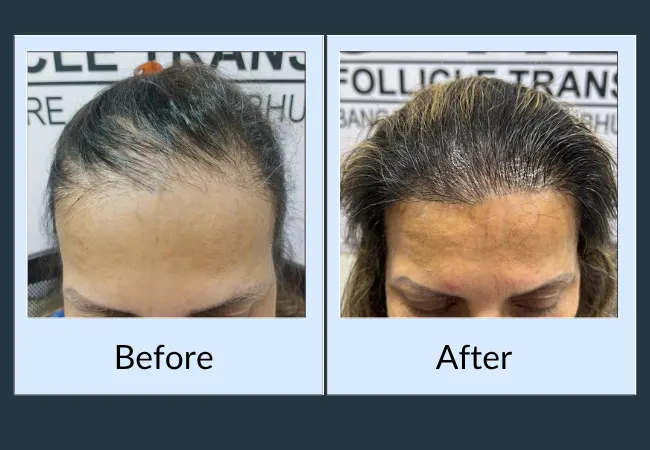
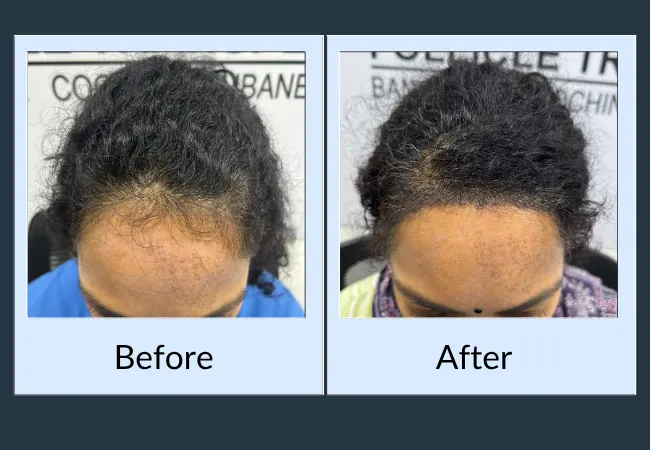
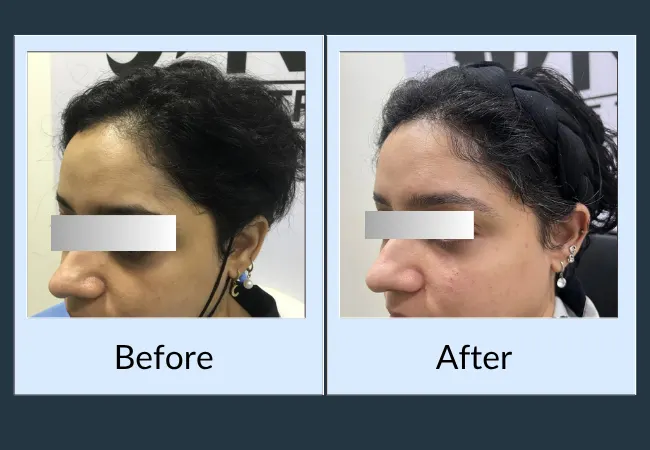
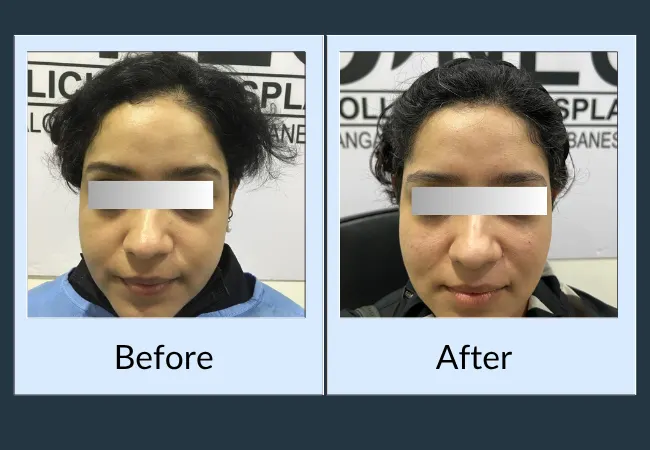
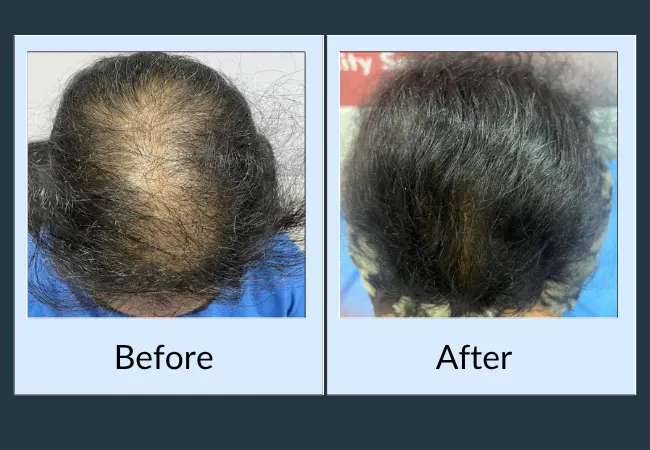
- Stable widening part line
- Localized thinning with good donor hair
- Traction alopecia from tight hairstyles if stable
- Scarring hair loss after burns or surgery, depending on assessment
- Eyebrow restoration in selected cases
Do Women Need to Shave the Entire Head?
Usually, no.
In many female hair transplant cases, complete head shaving is not required. Depending on the case, we may use techniques that allow partial trimming or concealed donor harvesting.
However, this depends on:
- Number of grafts needed
- Donor density
- Hair length
- Technique chosen
- Recipient area
- Patient comfort
- Surgical planning
The decision is personalized.
At Neo Follicle Hair Transplant Clinic, we take special care to plan female hair restoration with discretion, natural design, and emotional sensitivity.
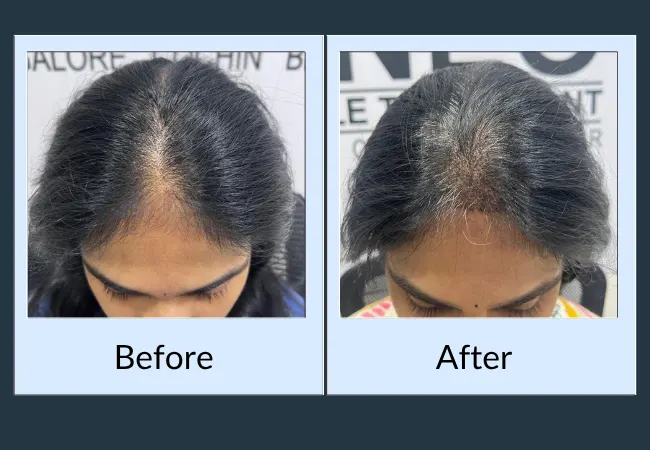
Red Flags: What Women Should Be Careful About
I say this with warmth, not judgment.
Many women spend months or years trying non-medical solutions before reaching a dermatologist. By then, the hair loss may have progressed.
Please be careful with:
- Generic salon “anti-hair fall” spa packages
- Beauty-counter biotin gummies without testing
- Miracle shampoos claiming to stop hair fall permanently
- Oils advertised as regrowing lost follicles
- Online remedies without diagnosis
- Random supplements taken for months
- Treatments that promise results in 7 days
- Clinics that start PRP or GFC without blood tests or scalp examination
- Hair transplant recommendations without donor evaluation
A shampoo can clean the scalp.
A conditioner can improve texture.
A serum may reduce breakage.
But if the root cause is PCOS, thyroid imbalance, ferritin deficiency, female pattern hair loss, or telogen effluvium, external cosmetic products alone will not solve the biological problem.
Please do not blame yourself.
You did what many women do when they are worried. But the next step should be medical clarity.
What Recovery Looks Like: Setting Realistic Expectations
Hair recovery is slow because hair grows slowly.
Most treatments take time.
A realistic roadmap may look like this:
First 4 to 6 Weeks
- Diagnosis is completed
- Blood tests are reviewed
- Scalp condition is assessed
- Treatment plan begins
- Shedding may still continue
2 to 3 Months
- Shedding may begin to reduce
- Scalp inflammation may improve
- Deficiencies may start correcting
- Early baby hair may appear in some cases
4 to 6 Months
- Hair thickness may improve
- Parting line may look better
- Ponytail may feel slightly denser
- Treatment response becomes clearer
6 to 12 Months
- More visible density improvement may occur
- Long-term stabilization can be assessed
- Maintenance plan is created
- Transplant may be considered only if needed and suitable
The key is consistency.
Hair treatment is not a one-day event. It is a medical journey.
A Gentle Message to Women Struggling With Hair Loss
If you are reading this while feeling anxious, embarrassed, or helpless, I want you to know something.
You are not alone.
Female hair loss is more common than most people realize. Many women suffer silently because they think they will be judged. But in my clinic, hair loss is not judged. It is understood.
My team and I approach every woman with dignity, privacy, and care.
Whether you are a young professional from Whitefield, a new mother from HSR Layout, a student from Jayanagar, a working woman from Bellandur, or someone travelling from another city to Bangalore, your concern deserves proper attention.
The most important step is not the most expensive treatment.
The most important step is the correct diagnosis.
Once we know the cause, we can create a plan.
And in many cases, there is a path forward.
FAQs on Female Hair Loss
1. Does PCOS-related hair loss mean I will go completely bald, and can it be reversed?
No, PCOS-related hair loss does not mean you will go completely bald.
Many women with PCOS experience thinning over the crown or widening of the parting line, but complete baldness is uncommon.
The condition can often be controlled and improved when treated early. The treatment usually includes hormonal evaluation, PCOS management, correction of deficiencies, topical medical therapy, and sometimes PRP or GFC therapy.
The key is not to delay treatment.
If the follicles are still active but weak, we have a better chance of improving density.
2. Is GFC therapy safe for women, and how many sessions does it take to see a tighter parting line?
GFC therapy is generally considered safe for women when performed in a medical clinic under sterile conditions.
It uses growth factors prepared from your own blood, so the risk of allergy is low.
The number of sessions depends on your diagnosis, severity of thinning, age, nutritional status, hormonal health, and hair follicle activity.
Many women may need a series of sessions spaced over a few months. Visible improvement in the parting line usually takes time because hair growth is slow. Some women start noticing changes after a few months, but full assessment often needs 4 to 6 months or more.
GFC works best when underlying causes such as low ferritin, vitamin D deficiency, thyroid imbalance, or PCOS are also addressed.
3. Can women safely undergo a hair transplant, and do we have to shave our entire head for it?
Yes, women can safely undergo a hair transplant when they are suitable candidates.
But not every woman with hair thinning needs or qualifies for a transplant.
We first check the donor area, diagnosis, stability of hair loss, scalp health, and expectations.
Women may benefit from hair transplant for hairline lowering, face-framing restoration, stable widening parting, traction alopecia, or localized thinning.
In many cases, women do not need to shave the entire head. Depending on the number of grafts and the surgical plan, partial trimming or concealed donor harvesting may be possible.
This decision is made after examination.
4. What basic blood tests should I get done before visiting Neo Follicle Clinic?
It is best to consult first so that tests can be customized to your case.
However, commonly useful blood tests for female hair loss may include:
- Complete Blood Count
- Serum Ferritin
- Serum Iron Profile
- Vitamin D
- Vitamin B12
- Thyroid Profile
- Fasting Blood Sugar
- HbA1c
- Hormonal profile if PCOS is suspected
- Testosterone or androgen markers when clinically needed
Please remember that tests should be interpreted by a doctor. A value may be “within normal range” but still not ideal for hair recovery in a particular patient.
At Neo Follicle Hair Clinic, we combine blood tests, clinical history, scalp examination, and trichoscopy before creating your treatment plan.
Final Words
Female hair loss is not a sign of weakness.
It is not something you should feel ashamed of.
It is a medical condition with emotional impact, and it deserves both science and sensitivity.
At Neo Follicle Hair Transplant Clinic in Bangalore, my approach is simple: diagnose deeply, treat honestly, and support every woman with respect.
If your hair is thinning, do not panic. Do not hide. Do not keep trying random products endlessly.
Start with the root cause.
Because when we understand why your hair is falling, we can finally begin the right journey toward recovery.
Blog Author & Medical Reviewer

Written by: Dr. Sandeep Mahapatra
Senior Dermatologist, Hair Transplant Surgeon & Founder – Neo Follicle Hair Transplant Clinic, Bangalore
Dr. Sandeep Mahapatra is a senior dermatologist and hair transplant surgeon in Bangalore with extensive experience in hair restoration, dermatology, and aesthetic treatments. As the founder of Neo Follicle Hair Transplant Clinic, he has successfully performed over 10,000 hair transplant procedures and regularly guides patients on safe, ethical, and natural-looking hair restoration.
Medically reviewed by: Dr. Sandeep Mahapatra
Senior Dermatologist & Hair Transplant Surgeon
Date Reviewed: 2026-06-14
This article has been medically reviewed by Dr. Sandeep Mahapatra to ensure that the information is clinically accurate, patient-friendly, and aligned with safe hair transplant practices. The content is intended for educational purposes and should not replace a personal consultation with a qualified hair transplant surgeon.
References
- American Academy of Dermatology Association - Female Pattern Hair Loss
Explains how female pattern hair loss presents, how dermatologists diagnose it, and treatment options including topical and oral medicines.
URL: https://www.aad.org/public/diseases/hair-loss/types/female-pattern - DermNet NZ - Female Pattern Hair Loss
A dermatologist-reviewed resource explaining diffuse thinning, widening part line, androgenetic alopecia in women, and clinical features of female pattern hair loss.
URL: https://dermnetnz.org/topics/female-pattern-hair-loss - Ramos PM, Miot HA. Female-pattern hair loss: therapeutic update. Anais Brasileiros de Dermatologia. 2023.
A peer-reviewed review covering medical treatments, topical minoxidil, oral options, and newer therapeutic approaches for female pattern hair loss.
URL: https://pmc.ncbi.nlm.nih.gov/articles/PMC10334345/ - Fabbrocini G, et al. Female pattern hair loss: A clinical, pathophysiologic, and therapeutic review. International Journal of Women’s Dermatology. 2018.
Covers the pathophysiology of female pattern hair loss, hormonal evaluation, hyperandrogenism, minoxidil, antiandrogens, and the importance of early diagnosis.
URL: https://pmc.ncbi.nlm.nih.gov/articles/PMC6322157/ - The Endocrine Society - Polycystic Ovary Syndrome Patient Resource
Useful reference for explaining PCOS, androgen excess, insulin resistance, irregular periods, acne, and hair-related hormonal symptoms in women.
URL: https://www.endocrine.org/patient-engagement/endocrine-library/pcos
Share this article :