
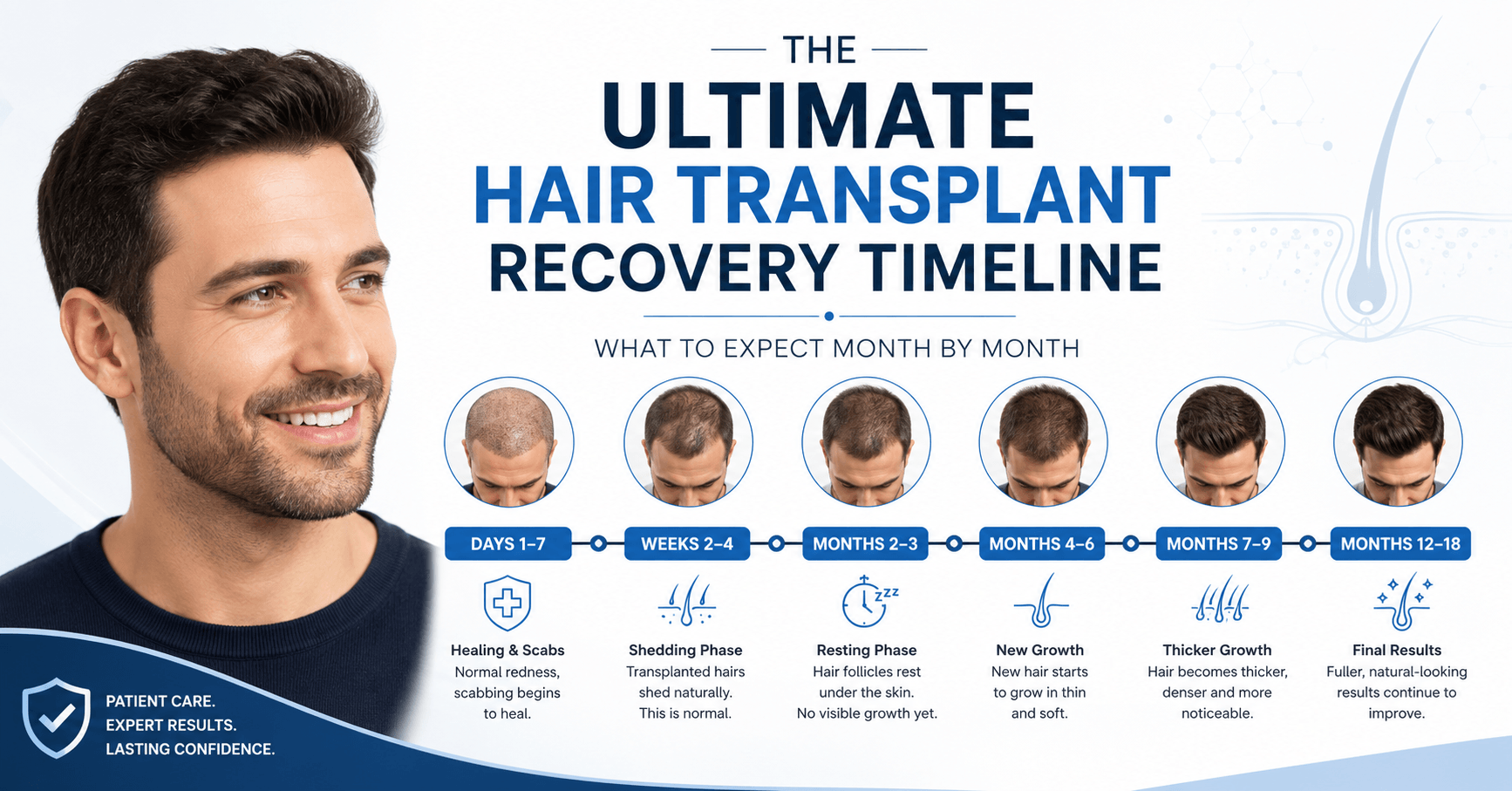
Hair transplant surgery is not just a one-day procedure. It is a journey.
As a hair transplant surgeon and dermatologist, one of the most common concerns I hear from patients is not about the surgery itself, but about what happens after the surgery.
“Doctor, when will the scabs fall?”
“Why is my transplanted hair shedding?”
“Is my result failing?”
“When will I actually see growth?”
“Can I wear a helmet in Bangalore traffic?”
“Can I go back to office in Whitefield or ORR?”
I completely understand these questions.
At Neo Follicle Hair Transplant Clinic in Bangalore, I meet many busy professionals from Marathahalli, Whitefield, Bellandur, Outer Ring Road, Electronic City, HSR Layout, Indiranagar, and Koramangala. Many of them want to return quickly to work, meetings, commuting, gym routines, and social life. But hair transplant recovery needs patience.
The truth is simple:
A successful hair transplant is 50% good surgery and 50% disciplined post-operative care.
Even if the grafts are implanted perfectly, the final outcome depends strongly on how carefully you follow the recovery instructions during the first few weeks and months.
In this blog, I will walk you through the complete hair transplant recovery timeline, from Day 1 to Month 18, so that you know exactly what is normal, what is expected, and when you should contact your doctor.
Most importantly, I want to reassure you:
Temporary shedding, slow growth, itching, mild redness, and uneven early growth are all part of the normal recovery process.
Let us go step by step.
The first week after your hair transplant is the most delicate phase.
During this time, the newly implanted grafts are settling into the recipient area. The donor area is also healing. Your scalp may feel tight, slightly numb, tender, or heavy. This is normal.
At Neo Follicle Hair Transplant Clinic, we give every patient detailed post-operative instructions because this first week sets the foundation for the final result.
The transplanted grafts are placed into tiny recipient sites on the scalp.
In the first few days, these grafts are delicate. They are not yet fully anchored. That is why you must avoid touching, rubbing, scratching, or applying pressure to the transplanted area.
By the end of the first week, the grafts become more secure. But this does not mean you can suddenly become careless. Healing continues below the surface.
You may notice:
These changes are usually temporary.
Swelling is more common around Day 2 to Day 4. It may move down from the forehead towards the eyes due to gravity. This can look worrying, but in most cases, it settles on its own.
For the first few nights, sleep with your head elevated.
I usually advise patients to sleep at a 30 to 45-degree angle using pillows or a recliner. This reduces swelling and prevents accidental rubbing of the grafts against the pillow.
Avoid sleeping on your stomach or directly on the transplanted area.
Hair washing after a transplant is not like regular shampooing.
In the first few days, washing must be extremely gentle. At Neo Follicle Hair Transplant Clinic, my team explains the exact washing technique depending on your procedure and scalp condition. We usually ask our clients to come to the clinic for their first hair wash.
Usually, the first wash is done gently, without rubbing the grafts. The aim is to keep the scalp clean, soften the crusts, and reduce infection risk.
Do not use force to remove scabs.
Let them loosen gradually.
Many patients from Whitefield, ORR, Bellandur, Marathahalli, Electronic City, and HSR Layout ask me:
“Doctor, when can I go back to office?”
For desk jobs, many patients can return within a few days, depending on swelling, comfort, and the nature of their work. However, if your office commute involves long bike rides, dust, heat, or helmet use, you need to be more careful.
If you work from home, the first week becomes much easier.
If you must travel, avoid crowded, dusty, sweaty, and high-friction situations.
The first week is about protection, cleanliness, and patience.
This is the phase that creates maximum anxiety.
Many patients call us around the second, third, or fourth week and say:
“Doctor, my transplanted hair is falling out. Has the transplant failed?”
My answer is almost always reassuring:
No, your transplant has not failed. This is usually normal shedding.
This phase is called shock loss or post-transplant shedding.
After a hair transplant, many of the transplanted hair shafts fall out temporarily. This usually happens between 2 to 8 weeks after surgery, although the timing can vary from person to person.
The important thing to understand is this:
The visible hair may fall out, but the root remains safe beneath the skin.
Think of it like a tree losing leaves after being replanted. The leaves may fall, but the root is still alive. With time, the root produces new growth.
Hair follicles go through growth cycles.
After transplantation, the follicles experience temporary stress because they have been moved from the donor area to the recipient area. In response, many follicles enter a resting phase.
During this transition, the hair shaft sheds.
This is not a sign of failure.
It is a normal biological response.
Shedding varies.
Some patients lose most visible transplanted hair. Some lose only part of it. Some patients feel that their scalp looks almost like the pre-transplant stage again.
This can be emotionally difficult.
I always tell my patients:
Do not judge your result in the first month.
The first month is not the result.
It is only the healing phase.
By this time, most scabs should have loosened and fallen off with proper washing. If a few scabs remain, do not pick them aggressively.
Scratching can damage the healing skin and may increase redness or irritation.
Some patients may also notice temporary shedding of existing native hair around the transplanted area. This can happen due to shock to nearby follicles.
In most cases, this is temporary.
However, if you already have progressive male pattern hair loss or female pattern hair loss, your doctor may advise medical maintenance treatment to protect existing hair.
This is the phase where patients need maximum mental patience.
You may look in the mirror every day.
You may compare your photos.
You may zoom into your scalp.
You may feel that nothing is going right.
Please do not panic.
At Neo Follicle, we prepare our patients for this phase because it is expected. I want you to remember one line:
Shedding is not losing the graft. Shedding is part of the graft’s transition into a new growth cycle.
Months 2 and 3 are often called the “silent phase” or “sleeping phase.”
This is another emotionally challenging period because there may be very little visible progress.
The scalp may look normal. The scabs are gone. The redness may be reducing. But the new hair has not yet started growing visibly in many patients.
This is where patience becomes very important.
Even if you cannot see much on the surface, activity is happening below the skin.
The transplanted follicles are adjusting, recovering, and preparing to enter the growth phase. The roots are alive, but they may not yet be producing visible hair above the scalp.
This is completely normal.
Hair growth is slow.
A hair transplant does not give instant density. It follows the natural biological cycle of hair.
During Months 2 and 3, many patients feel that they are stuck. They may even feel that the transplant has not worked.
But in most cases, this is simply the resting phase.
Yes, small pimples or folliculitis-like bumps can occur when new hairs try to emerge through the scalp.
Mild pimples are not unusual.
However, do not squeeze them aggressively. Do not apply random creams. If pimples are painful, increasing, or associated with redness and swelling, contact your doctor.
By this stage, most patients can resume normal professional routines.
Many patients from Whitefield, ORR, Bellandur, Koramangala, Indiranagar, and Electronic City are already back to their office schedules by this time.
However, you should still avoid unnecessary scalp trauma, harsh chemical treatments, and intense sun exposure without protection.
Focus on consistency.
Every scalp heals differently. Every hair cycle is slightly different.
Your friend’s Month 3 may not look like your Month 3.
That does not mean your result is poor.
This is the phase where hope returns.
For many patients, new hair growth begins to appear around Month 4. In some patients, it may start slightly earlier. In others, it may take a little longer.
The first growth is usually fine, thin, soft, and uneven.
Do not expect full density immediately.
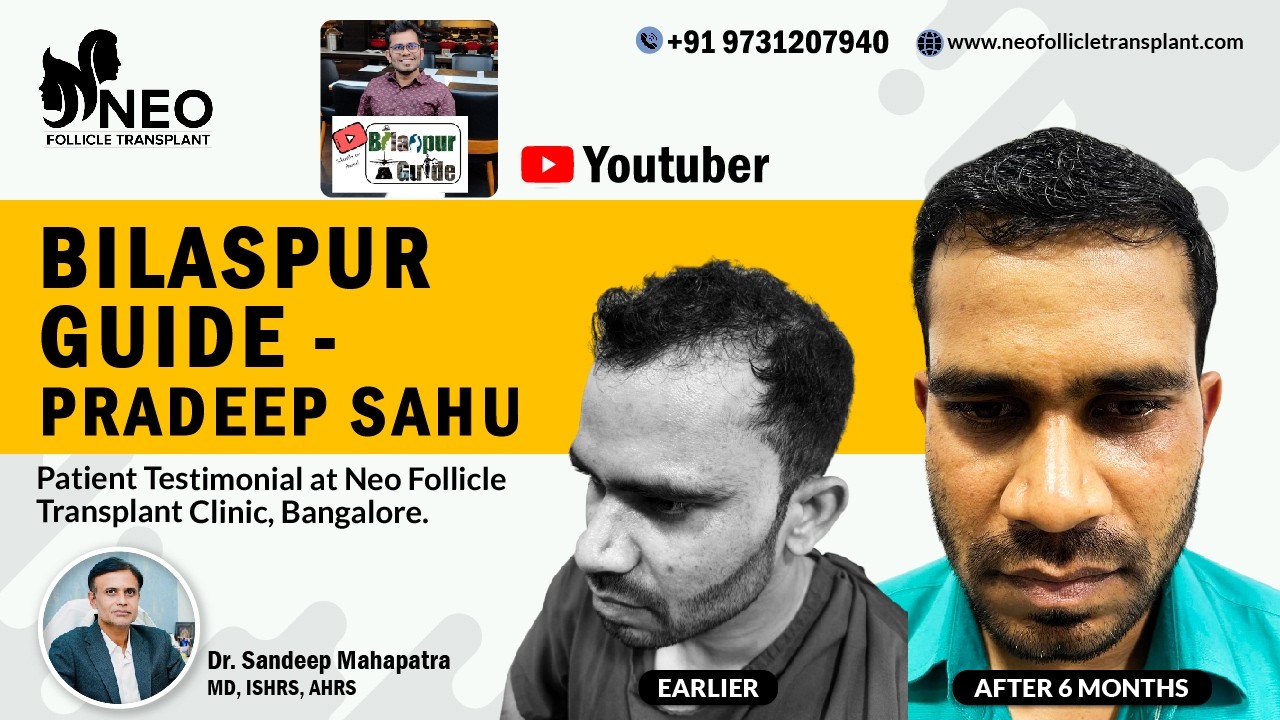
The first sprouts may look like baby hair.
They can be:
This is normal.
New hair does not immediately come out thick and mature. It gradually improves over the next several months.
Not all follicles start growing at the same time.
Some follicles wake up early. Others take longer. This is why the transplanted area may look patchy initially.
I always tell my patients:
Month 4 is not the final result. It is the beginning of visible growth.
Many patients start noticing early visible improvement between Months 4 and 6.
The hairline may look softer. The frontal area may show small sprouts. The scalp coverage may slowly improve.
For professionals working in Bangalore’s busy IT corridors like Marathahalli, Whitefield, ORR, Bellandur, and Electronic City, this is often the stage when they feel more confident during meetings, office interactions, and social events.
In most cases, gentle trimming is allowed after proper healing, but always follow your surgeon’s advice.
Avoid aggressive styling, harsh chemical treatments, colouring, straightening, or procedures that irritate the scalp unless your doctor clears you.
By Month 4, most patients are allowed to return to regular exercise routines, provided healing has been smooth.
However, heavy workouts, intense sweating, swimming, and contact sports should always be resumed as per your doctor’s timeline.
If you had any redness, infection, pimples, or delayed healing, your timeline may be different.
Months 7 to 9 are exciting because the result starts becoming more visible.
The new hair becomes thicker, darker, and more mature. The texture improves. The transplanted hair begins to blend better with the existing hair.
This is when many patients say:
“Doctor, now I can see the change.”
During this phase:
This is an important phase of cosmetic transformation.
Early transplanted hair may look thin or slightly rough. Over time, the follicle matures and produces better-quality hair.
The hair becomes stronger, darker, and more natural-looking.
By this stage, many patients can style their hair more freely.
You may be able to use mild styling products, but avoid overuse of harsh gels, chemical treatments, or heat-based styling unless your doctor permits.
If you are using hair fibres or concealers, check with your surgeon before applying them regularly.
This is the phase where patients often feel a major emotional shift.
A patient who was earlier avoiding photos may start feeling comfortable again. Someone who used to adjust their hairstyle before every meeting may become more relaxed.
Many of my patients from Indiranagar, Koramangala, HSR Layout, Whitefield, and ORR tell me that they feel more confident in client-facing roles, leadership meetings, social gatherings, and family functions.
Hair transplant is not only about hair.
For many people, it is about feeling like themselves again.
By Month 10 to Month 12, most patients see a substantial improvement.
The transplanted hair has grown longer. Density is better. The hairline looks more settled. The overall appearance becomes much more natural.
However, this still may not be the absolute final result for everyone.
By 12 months, many patients can expect:
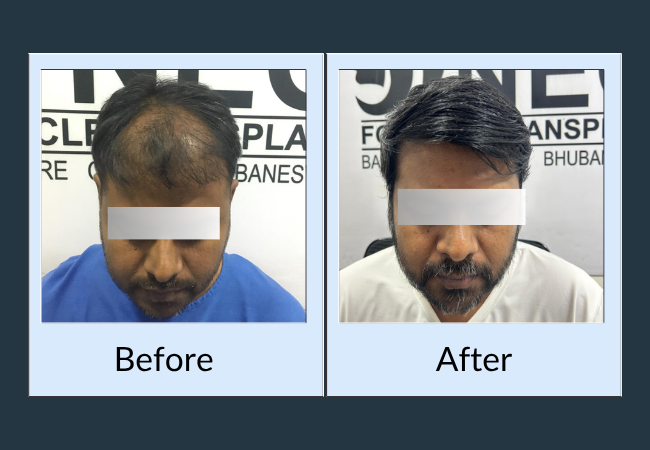
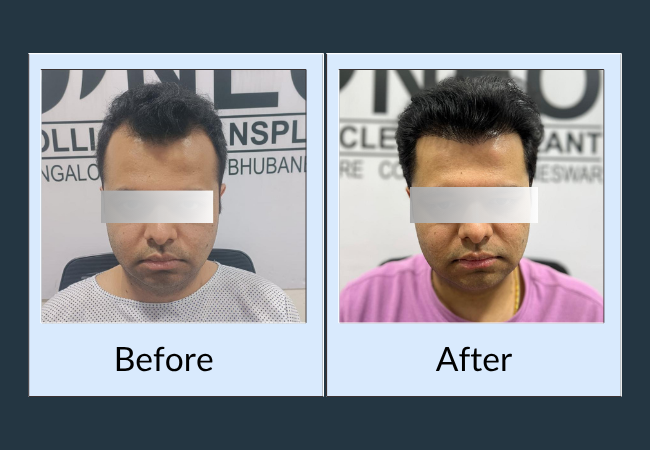
This is usually the point where the patient can appreciate the transformation clearly in before-and-after photographs.
For many patients, 12 months gives a very good idea of the final result.
But in some cases, especially crown transplants, high-density cases, female hair restoration, or patients with slower growth cycles, maturation may continue beyond 12 months.
That is why I often explain that the full result can take 12 to 18 months.
The crown area often grows more slowly than the frontal hairline.
This is because of differences in blood supply, hair direction, spiral pattern, and growth behaviour. Patients who undergo crown restoration should be especially patient.
Do not judge crown density too early.
This is the final maturation phase.
By now, the transplanted hair has become stronger, thicker, and more natural. The final density becomes more visible. The texture settles. The hairline blends better with the rest of the scalp.
This is the phase where the result truly matures.
Between 12 and 18 months:
This is why I call this phase the “final masterpiece.”
Hair transplant is not instant cosmetic makeup. It is biological restoration.
The grafts need time.
The scalp needs time.
The follicles need time.
The final result needs time.

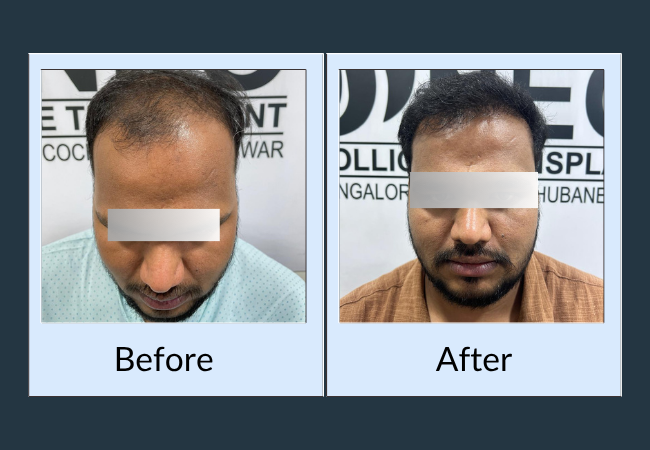
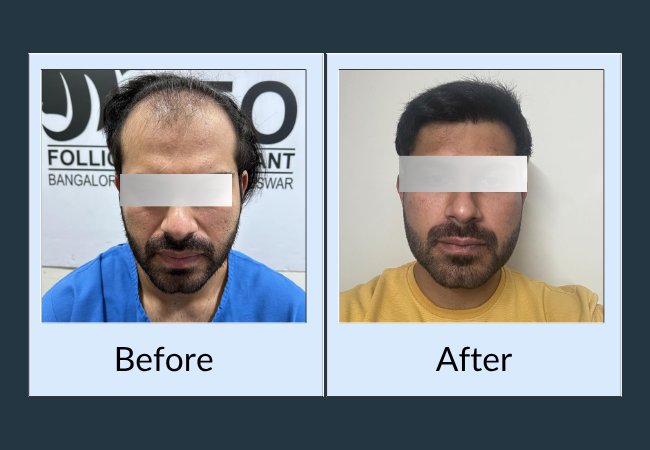
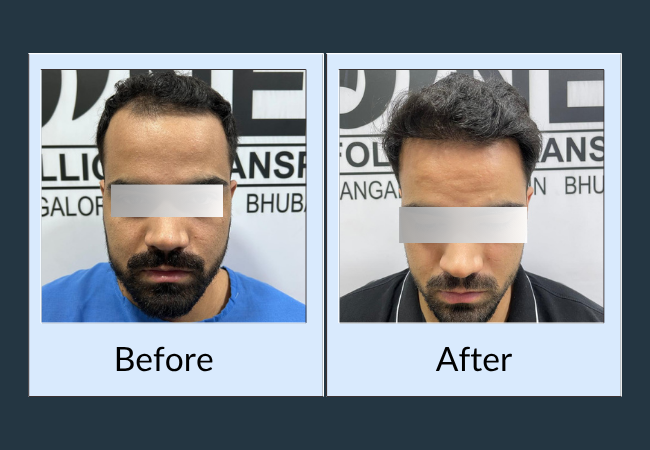
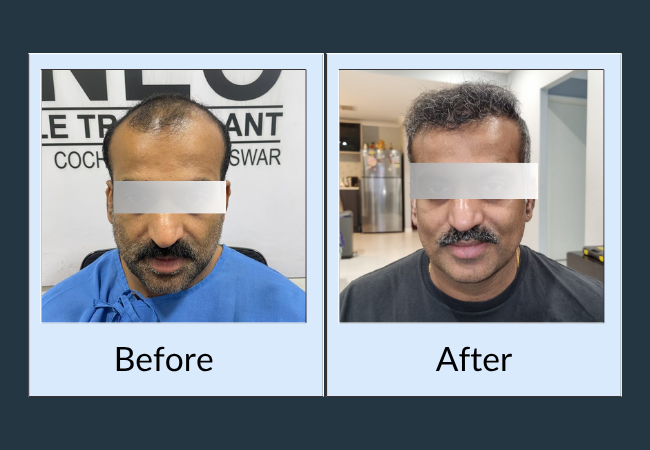
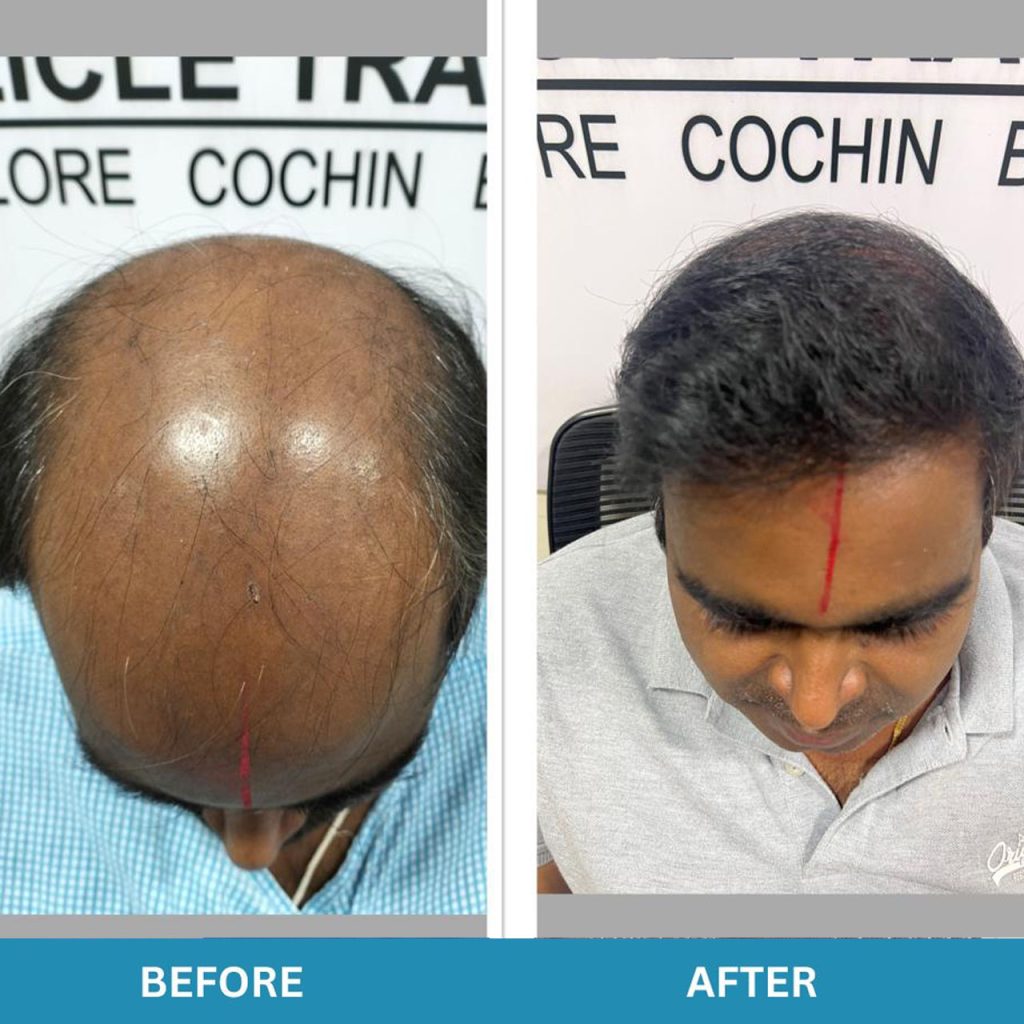


Hair transplanted from the safe donor zone is generally more resistant to pattern hair loss.
However, your existing non-transplanted hair can continue thinning if your hair loss is progressive. This is why long-term medical management may be important.
A good hair transplant plan is not only about today’s hairline. It is about your future hair loss pattern as well.
At Neo Follicle Hair Transplant Clinic, we always consider donor area strength, age, grade of baldness, hair quality, future hair loss risk, and realistic density planning before surgery.
Post-operative care is not optional.
It directly affects healing, comfort, graft survival, and final results. I always tell my patients:
My team can do the surgery, but you must protect the result during recovery.
This is a very common question in Bangalore.
Patients from Marathahalli, Whitefield, Bellandur, ORR, Electronic City, HSR Layout, Indiranagar, and Koramangala often rely on two-wheelers for commuting.
But helmets create pressure and friction.
In the early days, wearing a helmet can disturb grafts, increase sweating, and irritate the scalp. The exact timeline for helmet use depends on your healing and your surgeon’s advice.
In general, avoid helmet pressure during the early graft-settling period. When you restart, use a clean, loose, well-fitted helmet and avoid long sweaty rides initially.
If you must commute early, discuss this with your surgeon before surgery so that your post-op plan can be adjusted.
Bangalore’s weather may feel moderate, but sun exposure, dust, pollution, and sweating can irritate the healing scalp.
Avoid direct sunlight in the early weeks. If you work outdoors or travel frequently between office locations, plan your recovery carefully.
Light walking is usually allowed early, but heavy gym workouts must be avoided in the initial recovery period.
Heavy lifting can increase blood pressure, sweating, and scalp irritation. Swimming also carries infection risk in the early healing phase.
Always resume workouts gradually.
Most symptoms after hair transplant are mild and temporary.
However, you should contact your doctor if you notice:
Do not self-medicate.
Do not rely only on internet advice.
Your surgeon knows your case, your graft count, your donor area, your scalp condition, and your medical history.
Hair transplant recovery is not only physical. It is emotional.
Most patients go through these feelings:
You are protecting the grafts and watching every movement.
This is when many patients panic.
The sleeping phase can feel frustrating.
Small sprouts bring confidence.
The result becomes visible.
The journey finally feels worth it.
If you are in the anxious phase right now, please remember:
You are not alone. Almost every hair transplant patient experiences this emotional roller coaster.
A hair transplant is a planned medical and artistic procedure. But the result does not appear overnight.
The first week is for protection.
The first month is for healing and shedding.
Months 2 and 3 are for patience.
Months 4 to 6 bring the first signs of growth.
Months 7 to 9 improve density and texture.
Months 12 to 18 reveal the mature result.
At Neo Follicle Hair Transplant Clinic in Bangalore, my team and I guide patients through every stage of this journey.
Whether you are a software engineer from Whitefield, a manager working on Outer Ring Road, an entrepreneur from Koramangala, or a professional commuting from HSR Layout, your recovery plan must fit your lifestyle while still protecting your grafts.
My strongest advice is this:
Do not judge your hair transplant too early. Follow your post-op care strictly, stay in touch with your doctor, and give your follicles the time they need.
Hair transplant recovery requires patience, but when planned and cared for properly, the final result can be deeply rewarding.
Yes, it is usually normal.
Many patients notice shedding around 2 to 4 weeks after a hair transplant. This is called shock loss. The visible hair shaft falls out, but the root usually remains safe beneath the skin.
This does not mean your transplant has failed.
New growth usually begins gradually after the resting phase, often around Month 4 onwards.
Gentle washing usually begins as per your surgeon’s instructions in the first few days after surgery. Normal washing is resumed gradually once the grafts are secure and the scalp has healed.
Avoid tight caps and helmets in the early phase because they can create friction and pressure on the grafts.
In Bangalore, many patients need helmets for commuting through Marathahalli, Whitefield, ORR, Bellandur, Electronic City, HSR Layout, Indiranagar, and Koramangala. If you rely on a two-wheeler, discuss your commute with your surgeon before the procedure.
Do not restart helmet use without medical clearance.
Light walking may be allowed early, but heavy workouts should be avoided during the initial healing period.
Heavy weightlifting, intense cardio, swimming, sauna, steam, and contact sports should be resumed only after your surgeon confirms that your scalp has healed well.
Sweating, pressure, friction, and infection risk are the main concerns.
Your exact timeline depends on your healing, graft stability, and procedure type.
Small pimples can occur when new hairs start emerging through the scalp. Mild redness may also persist in some patients, especially if the skin is sensitive.
Do not squeeze pimples aggressively.
Do not apply random creams or home remedies.
Do not scratch the scalp.
If the pimples are painful, increasing, pus-filled, or associated with spreading redness, contact your hair transplant doctor. Your doctor may prescribe appropriate medication or scalp care based on your condition.
Most patients start seeing visible improvement from Months 4 to 6. Density improves significantly between Months 7 and 12.
The final mature result usually takes 12 to 18 months, especially for crown areas or larger restoration cases.
Hair transplant recovery is slow but progressive. Patience is essential.
Many patients with desk jobs can return to work within a few days, depending on swelling, comfort, and the nature of their job.
If your work involves client meetings, outdoor travel, helmet use, dust exposure, or heavy sweating, you may need a more careful return plan.
At Neo Follicle, we often help patients from Bangalore’s IT and business hubs plan recovery around their work schedule.
Avoid touching the transplanted area in the early days.
Touching, rubbing, or scratching can disturb grafts and irritate the scalp. Follow your clinic’s washing and care instructions carefully.
Once the grafts are secure and the scalp has healed, normal handling gradually becomes safe.
This is usually because of shock shedding and the resting phase.
After shedding, the follicles remain beneath the skin but may not yet produce visible hair. This can make the scalp look unchanged or even thinner temporarily.
This phase is normal and does not mean failure.
Mild redness is common after hair transplant surgery. It usually reduces gradually over days to weeks.
In some patients with sensitive skin, redness may last longer.
If redness is increasing, painful, hot, swollen, or associated with pus or fever, contact your doctor.
The most important thing is patience.
Do not panic during shedding.
Do not judge your result in the first 3 months.
Do not skip post-operative instructions.
Do not compare your timeline with someone else’s.
A good hair transplant result takes time, discipline, and proper follow-up.

Written by: Dr. Sandeep Mahapatra
Senior Dermatologist, Hair Transplant Surgeon & Founder – Neo Follicle Hair Transplant Clinic, Bangalore
Dr. Sandeep Mahapatra is a senior dermatologist and hair transplant surgeon in Bangalore with extensive experience in hair restoration, dermatology, and aesthetic treatments. As the founder of Neo Follicle Hair Transplant Clinic, he has successfully performed over 10,000 hair transplant procedures and regularly guides patients on safe, ethical, and natural-looking hair restoration.
Medically reviewed by: Dr. Sandeep Mahapatra
Senior Dermatologist & Hair Transplant Surgeon
Date Reviewed: 2026-06-15
This article has been medically reviewed by Dr. Sandeep Mahapatra to ensure that the information is clinically accurate, patient-friendly, and aligned with safe hair transplant practices. The content is intended for educational purposes and should not replace a personal consultation with a qualified hair transplant surgeon.