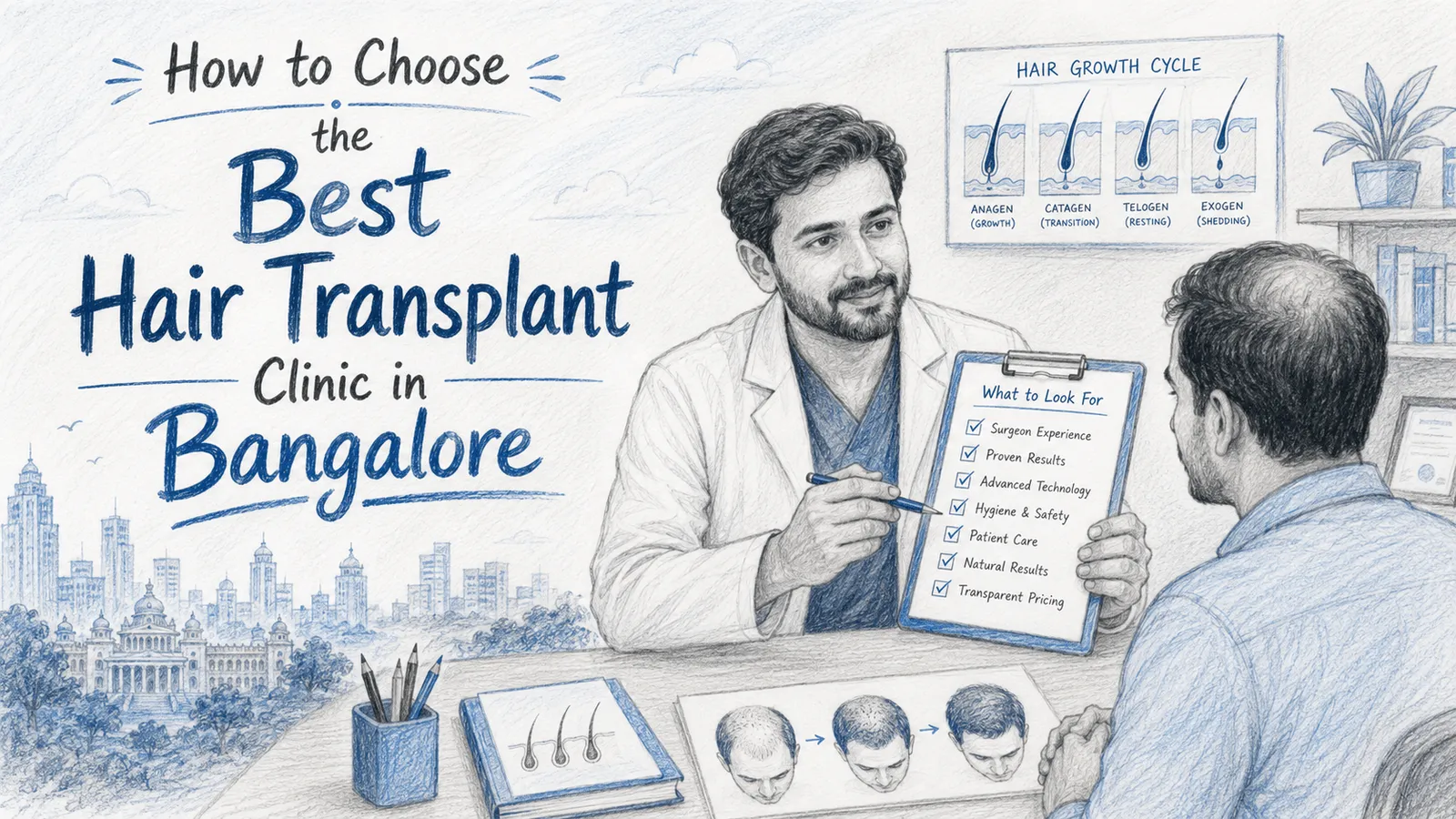
Blog Summary: Choosing the best hair transplant clinic in Bangalore means checking surgeon involvement, safety protocols, graft transparency, and realistic results - not just price. Dr Sandeep Mahapatra, Hair Transplant Surgeon at Neo Follicle Hair Transplant Clinic in Bangalore, recommends choosing a clinic that examines your donor area carefully and offers honest, long-term follow-up.
Hair loss is not just a cosmetic concern. For many men and women, it quietly affects confidence, social comfort, professional presence, and even the way they look at themselves in the mirror.
As a dermatologist, senior hair transplant surgeon, and founder of Neo Follicle Hair Transplant Clinic in Bangalore, I meet patients every day who come with one simple question:
“Doctor, how do I know which hair transplant clinic is right for me?”
This is a very important question.
Over the years, after performing 10,000+ hair transplant procedures, my team and I have seen both sides of the industry. We have seen excellent transformations when hair transplant is done with proper planning, medical ethics, surgeon involvement, and long-term care.
We have also seen repair cases where patients suffered because they selected a clinic only based on price, advertisements, or unrealistic promises.
If you are planning a hair transplant in Bangalore, this guide will help you make a safe, informed, and confident decision.
My goal is not to frighten you. My goal is to protect you.
A hair transplant can be life-changing when done correctly. But it is still a medical procedure.
The clinic you choose, the surgeon you trust, and the process followed on the day of surgery can make a big difference to your safety, comfort, natural-looking result, and long-term satisfaction.
Why Choosing the Right Hair Transplant Clinic Matters
Many patients think hair transplant is simply about “removing hair from the back and putting it in the front.”
But in reality, a good hair transplant requires:
- Correct diagnosis of the cause of hair loss
- Assessment of donor area strength
- Safe extraction of grafts
- Natural hairline planning
- Proper angle, depth, and direction of implantation
- Sterile surgical environment
- Graft handling with minimal trauma
- Medical monitoring during the procedure
- Long-term follow-up and hair loss management
The transplanted follicles are precious. Your donor area is limited. Once donor grafts are damaged or over-harvested, they cannot be magically replaced.
This is why choosing the best hair transplant clinic in Bangalore should never be a rushed decision.
A good clinic will not pressure you into surgery. It will first examine whether you are the right candidate.
Start With the Surgeon, Not the Advertisement
When you search online for a hair transplant clinic in Bangalore, you may see many advertisements promising dense hair, low-cost packages, celebrity-like results, or “guaranteed” outcomes.
But before you look at the package, ask one basic question:
Who is the surgeon responsible for my procedure?
At a good clinic, the surgeon should not be just a name on the board or website. The surgeon should be directly involved in your diagnosis, planning, hairline design, surgical decision-making, and post-operative care.
What You Should Check About the Surgeon
Before selecting a clinic, check:
- Is the doctor medically qualified?
- Is the doctor experienced in dermatology, hair restoration, or surgical hair transplant?
- How many hair transplant procedures has the surgeon performed?
- Does the surgeon personally examine your scalp?
- Does the surgeon explain your donor area limitations?
- Does the surgeon create the hairline design?
- Is the surgeon present during the procedure?
- Does the surgeon offer long-term follow-up?
Hair transplant is not just a technical procedure. It is a medical and artistic procedure.
The surgeon must understand scalp health, hair loss progression, graft survival, hairline aesthetics, facial proportions, and future baldness planning.
Choose a Clinic That First Diagnoses the Cause of Hair Loss
Not every person with hair fall needs a hair transplant.
This is one of the most important points I want every patient to understand.
Some patients may have:
- Early male pattern hair loss
- Female pattern hair loss
- Nutritional deficiency
- Thyroid-related hair fall
- Stress-related shedding
- Alopecia areata
- Scalp infection
- Dandruff-related inflammation
- Post-fever or post-illness shedding
- Hair loss after weight loss
- Hair loss due to medications
If a clinic recommends surgery without proper diagnosis, be careful.
At Neo Follicle, we first evaluate the type and stage of hair loss. We check whether the hair loss is stable or still progressing. We assess whether medical treatment, PRP, GFC, QR678, exosome therapy, or other non-surgical treatments may help before surgery.
A transplant is useful when there is permanent hair loss in a suitable area and the donor area is strong enough.
A Good Clinic Will Tell You “No” When Required
Sometimes, the best medical advice is not surgery.
For example, a young patient with early hair thinning may need medicines and monitoring first. A patient with weak donor area may not be suitable for a high-graft transplant. A patient with uncontrolled diabetes may need medical stabilization before surgery.
A trustworthy clinic will explain this honestly.
Look for Direct Surgeon Involvement During the Procedure
This is one of the biggest differences between a safe clinic and a risky one.
In some clinics, the doctor may only meet the patient briefly. After that, most of the procedure may be handled by technicians.
Technicians can assist. They can help with preparation, graft sorting, and support tasks under supervision. But important medical steps should not be left entirely to non-medical staff.
Key Steps Where Surgeon Involvement Matters
A qualified surgeon should be responsible for:
- Final surgical planning
- Donor area assessment
- Hairline design
- Local anesthesia planning
- Extraction strategy
- Recipient area planning
- Slit creation or implantation planning
- Safety monitoring
- Managing any medical issue during surgery
- Post-operative instructions and follow-up
This is not about ego. It is about patient safety.
If you are paying for a hair transplant, you deserve to know who is actually performing your procedure.
Before you book, ask the clinic clearly:
“Doctor, which parts of the procedure will you personally perform or supervise?”
A transparent clinic will answer without hesitation.
Check the Clinic’s Hygiene, Sterilization, and OT Protocols
Hair transplant involves tiny openings in the scalp. This means sterilization and hygiene are extremely important.
A clinic may look beautiful from the outside, but what matters most is the clinical protocol inside the procedure room.
What a Safe Hair Transplant Clinic Must Maintain
A good clinic should follow strict protocols such as:
- Sterile instruments
- Properly cleaned procedure room
- Disposable needles and consumables where required
- Fresh surgical gloves, masks, caps, and gowns
- Sterile draping of the patient
- Safe handling of extracted grafts
- Clean storage solutions for graft preservation
- Proper biomedical waste disposal
- Emergency medicines and monitoring support
- Infection control protocols
- Trained medical and nursing team
Do not feel shy to ask about hygiene. A responsible clinic will welcome such questions.
At Neo Follicle, patient safety is never treated as a background process. Every procedure is planned with strict attention to cleanliness, sterile technique, and surgical discipline.
Ask for Transparent Graft Counting
Graft count is one of the most misunderstood areas in hair transplant.
Many patients are confused between:
- Grafts
- Follicles
- Hairs
- Sessions
- Density
- Coverage
A graft is a naturally occurring follicular unit. One graft may contain one, two, three, or sometimes four hair follicles.
So, when a clinic says “3000 grafts,” you should understand what is being counted.
Questions to Ask About Grafts
Before confirming your procedure, ask:
- How many grafts do I actually need?
- How many grafts can be safely extracted from my donor area?
- Will the graft count be documented?
- How will the grafts be counted?
- Are you charging per graft, per session, or by package?
- What happens if fewer grafts are extracted than promised?
- Are there any hidden charges?
A good clinic will not inflate numbers just to impress you.
Very high graft promises can be dangerous if your donor area is not strong enough. Over-harvesting can leave the back of the scalp thin, patchy, or scarred.
Remember, the donor area is your lifetime resource. It must be protected.
Evaluate the Hairline Design Carefully
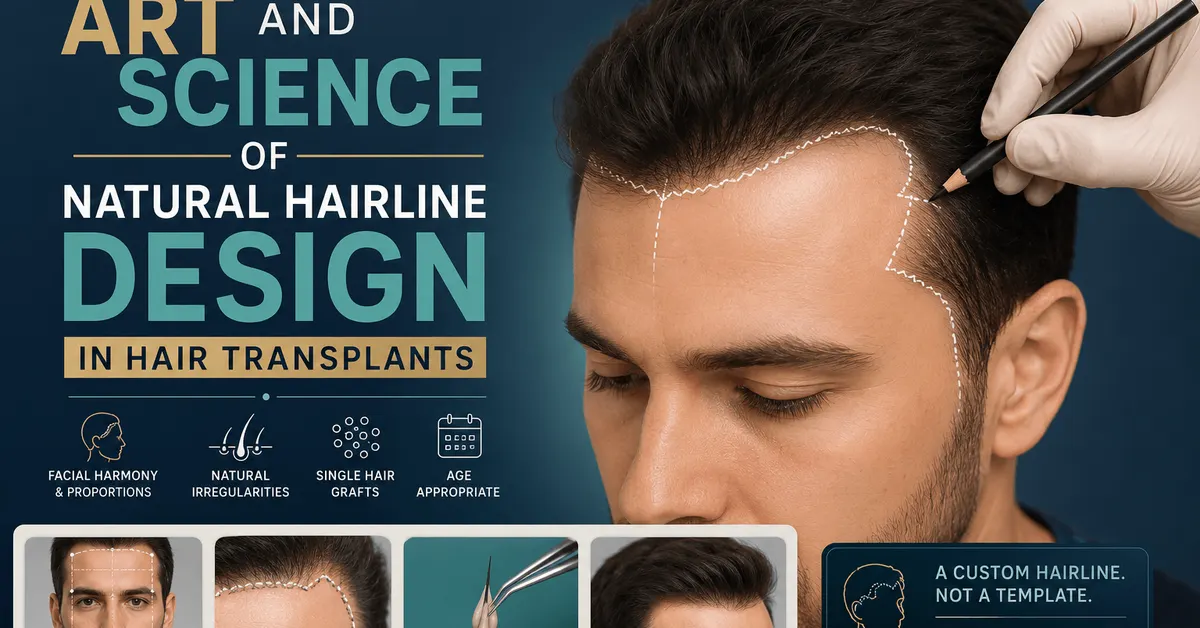
A natural hairline is one of the most important signs of a good hair transplant.
Many poor results happen because the hairline is placed too low, too straight, too dense in the wrong area, or not matched to the patient’s age and face.
A good hairline should look natural today and also remain appropriate as you age.
What Makes a Hairline Look Natural?
A natural hairline considers:
- Age of the patient
- Shape of the forehead
- Facial proportions
- Existing hair loss stage
- Future hair loss possibility
- Donor area strength
- Direction of natural hair growth
- Soft irregularity in the frontal line
- Gradual density transition
Young patients often request a very low hairline. But as a surgeon, I must think long term.
If the hairline is placed too aggressively in a young patient, it may look unnatural later if hair loss progresses behind it.
At Neo Follicle, we spend time on hairline planning because this is where science and aesthetics meet.
Look for a Clinic That Explains the Technique Clearly
Patients often ask whether FUE, DHT, FUT, Sapphire FUE, or implanter-based techniques are best.
The honest answer is: technique matters, but planning and execution matter more.
Different patients need different approaches based on their hair loss grade, donor area, scalp quality, expectations, and future planning.
A Good Clinic Should Explain
The clinic should clearly explain:
- Which technique is suitable for you
- Why that technique is recommended
- How grafts will be extracted
- How grafts will be implanted
- Whether shaving is needed
- How long the procedure will take
- What recovery will look like
- What results you can realistically expect
At Neo Follicle, we use no-touch implantation principles with European Neo Implanters wherever suitable. The aim is to reduce unnecessary graft handling, maintain proper angle and depth control, and support natural-looking placement.
But no technique should be marketed like magic.
The best result comes from proper diagnosis, safe extraction, careful graft handling, artistic implantation, and honest aftercare.
Understand the Importance of Long-Term Hair Loss Management
A hair transplant moves permanent donor hair to bald or thinning areas. But it does not stop future hair loss in your existing native hair.
This is why long-term planning is very important.
Some patients think, “Once I do a transplant, my hair loss problem is solved forever.” This is not always true.
If your existing hair continues to thin, you may need:
- Medical treatment
- PRP or GFC support
- Lifestyle correction
- Scalp care
- Follow-up monitoring
- Future planning if hair loss progresses
A good clinic will explain the full journey, not just the surgery day.
At Neo Follicle, we guide patients on both transplant and long-term hair preservation.
This is especially important for patients from areas like Marathahalli, Whitefield, Bellandur, HSR Layout, Sarjapur Road, Indiranagar, Koramangala, Electronic City, and other parts of Bangalore where stressful work schedules, pollution, hard water concerns, irregular sleep, and lifestyle factors commonly worsen hair fall.
Local Factors in Bangalore That Can Affect Hair Health
Many patients in Bangalore complain that their hair fall increased after moving to the city.
This may be due to a combination of factors, not just one reason.
Common triggers include:
- Stressful IT and corporate work schedules
- Irregular sleep
- Pollution and dust exposure
- Hard water concerns in some localities
- Frequent helmet use
- Poor diet due to busy lifestyle
- Vitamin D and B12 deficiency
- Dandruff and scalp inflammation
- Sudden weight changes
- Family history of baldness
Patients from Whitefield, Marathahalli, Brookefield, Kadubeesanahalli, Bellandur, HSR Layout, Sarjapur Road, Electronic City, Indiranagar, JP Nagar, and North Bangalore often share similar concerns.
This does not mean Bangalore alone causes baldness. But local lifestyle and environmental factors can worsen existing hair fall tendencies.
A good clinic should not only transplant hair. It should also help you understand why your hair is falling.
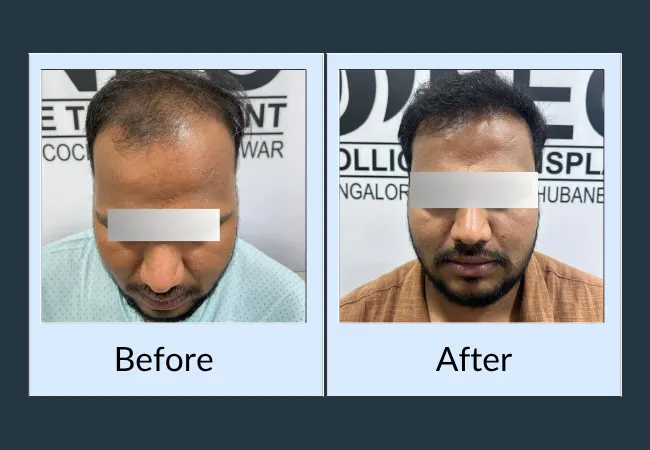
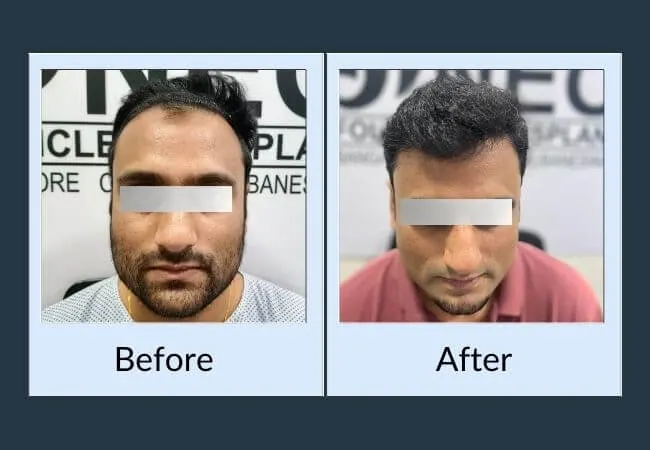
Check Before-and-After Results Carefully
Before-and-after photos can help you understand the clinic’s work, but you must evaluate them carefully.
Do not look only at dramatic results. Look for naturalness.
What to Observe in Before-and-After Photos
Check:
- Does the hairline look natural?
- Is the density realistic?
- Are the photos taken in similar lighting?
- Is the angle similar?
- Is the result suitable for the patient’s age?
- Does the donor area look healthy?
- Are different hair loss grades shown?
- Are repair cases shown?
- Are results shown after enough time, usually 9 to 12 months?
Be careful if all photos look too perfect or heavily edited.
A genuine clinic will explain that hair transplant results take time. Usually, visible growth starts gradually after a few months, and fuller results are seen around 9 to 12 months, sometimes longer depending on the patient.
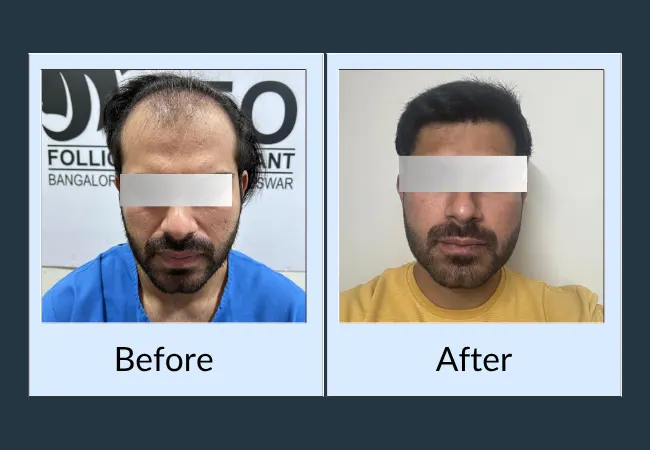
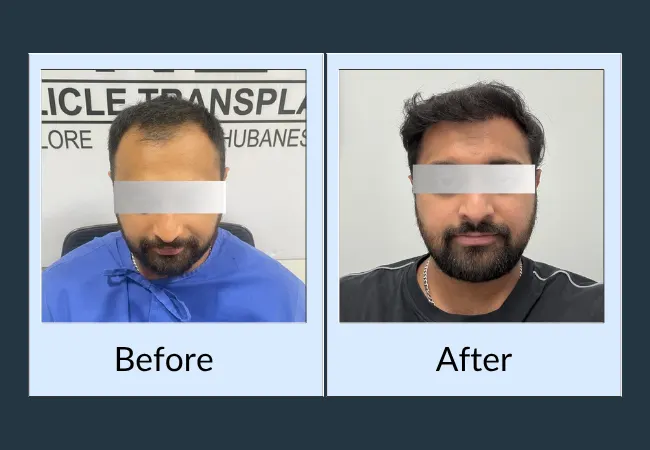
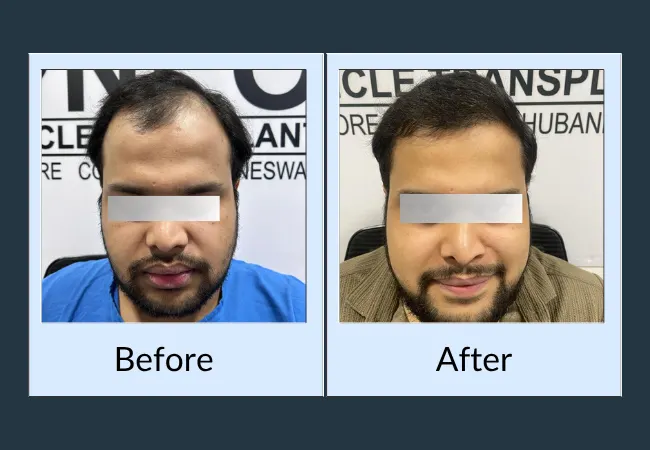
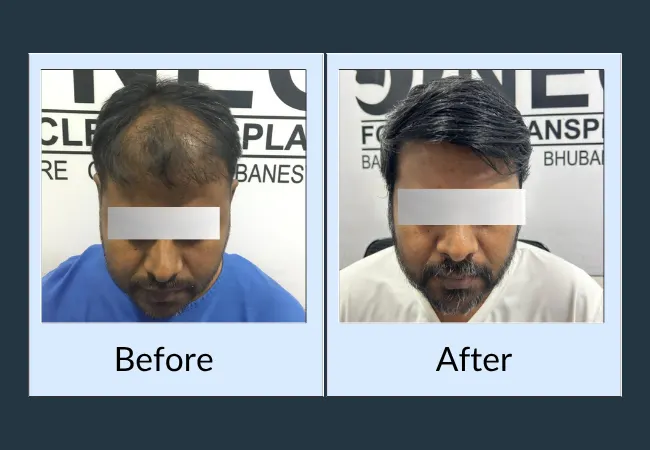
Understand the Real Timeline of Hair Transplant Results
Hair transplant is not an instant result procedure.
After surgery, many patients become anxious when transplanted hairs shed. This is normal.
Typical Hair Transplant Growth Timeline
A general timeline is:
- First few days: Mild swelling, redness, crusting, and tenderness may occur.
- 2 to 4 weeks: Many transplanted hairs may shed. This is expected.
- 3 to 4 months: Early new hair growth may begin.
- 5 to 6 months: Visible improvement starts becoming clearer.
- 9 to 12 months: Most patients see a fuller result.
- 12 to 18 months: Final maturation may continue in some cases.
A good clinic will prepare you emotionally for this timeline.
If a clinic promises full results in a few weeks, that is not realistic.
Compare Cost, But Do Not Choose Only by Price
Cost is important. I understand that every patient has a budget.
But hair transplant should not be selected only by the lowest package.
A very low-cost offer may sometimes mean compromises in:
- Surgeon involvement
- OT hygiene
- Graft handling
- Team training
- Time spent per patient
- Sterilization
- Follow-up care
- Transparency in graft count
- Emergency preparedness
This does not mean the most expensive clinic is always the best. It means you should compare value, safety, transparency, and medical responsibility.
What a Transparent Cost Discussion Should Include
A good clinic should explain:
- Estimated graft requirement
- Package details
- What is included
- What is not included
- Medication charges
- Follow-up schedule
- Whether PRP or additional treatments are separate
- Whether there are any hidden costs
- Payment terms
You should never feel trapped after paying an advance.
Dominant Red Flags: Warning Signs You Must Not Ignore
This is the most important section of this blog.
Please read it carefully before choosing any hair transplant clinic in Bangalore or anywhere else.
Red Flag 1: “Black-Market” Hair Transplant Clinics
Black-market clinics are centers where hair transplant surgery is marketed aggressively but major parts of the procedure may be done by unqualified or poorly supervised people.
These clinics may use the name of a doctor, but the doctor may not be actively involved.
You may see:
- Very low-cost bulk packages
- Same-day pressure to book
- No proper medical examination
- No clear surgeon responsibility
- Technicians doing major surgical steps
- Poor hygiene standards
- Unrealistic graft numbers
- Little or no follow-up
Hair transplant is a surgical procedure. It should not be treated like a salon service.
Red Flag 2: Uncommonly Low Packages With Hidden Costs
If the price sounds too good to be true, pause and ask questions.
Some clinics advertise a very low package, but later add charges for:
- Medicines
- PRP
- Extra grafts
- Consumables
- Follow-up
- Taxes
- Special technique
- Implanters
- Post-op kits
A good clinic gives clear pricing before the procedure.
Red Flag 3: Technicians Performing Major Steps Without Surgeon Presence
This is a serious warning sign.
Technicians may support the procedure, but they should not independently make medical decisions, design the hairline, plan extraction, create recipient sites, or manage complications without a qualified doctor.
Ask directly:
“Will the surgeon be present during the procedure?”
If the answer is vague, be careful.
Red Flag 4: Promise of 100% Graft Survival
No ethical surgeon should promise 100% graft survival.
Hair transplant success depends on many factors:
- Donor graft quality
- Extraction technique
- Graft handling
- Implantation angle and depth
- Bleeding control
- Patient healing
- Smoking status
- Diabetes control
- Scalp health
- Post-operative care
- Existing hair loss progression
A good clinic will aim for high graft survival but will explain that no medical procedure can honestly guarantee 100%.
Red Flag 5: No Discussion About Donor Area Limitation
Your donor area is limited.
If a clinic promises unlimited grafts or very high-density coverage without examining donor strength, it is a red flag.
Over-harvesting can cause permanent donor thinning.
Red Flag 6: No Medical History Review
Before surgery, the clinic should ask about:
- Diabetes
- Hypertension
- Heart disease
- Blood thinners
- Allergies
- Previous surgeries
- Smoking
- Alcohol use
- Keloid tendency
- Scalp infections
- Current medicines
If nobody asks about your health, do not proceed.
Red Flag 7: Pressure Selling
A medical decision should not feel like a sales trap.
Be careful if you hear:
- “Book today or the offer is gone”
- “You need surgery immediately”
- “No need for tests”
- “Doctor will see you on surgery day only”
- “Technicians are enough”
- “Guaranteed full density”
- “No risk at all”
A good clinic gives you time to think.
Questions You Should Ask Before Finalizing a Clinic
Carry this checklist during your consultation.
Surgeon and Team Questions
Ask:
- Who is the main surgeon?
- What are the surgeon’s qualifications?
- How many procedures has the surgeon performed?
- Will the surgeon examine me personally?
- Will the surgeon design my hairline?
- Which steps will the surgeon perform or supervise?
- Who are the supporting team members?
Safety Questions
Ask:
- Is the procedure done in a sterile setting?
- Are instruments sterilized properly?
- Are disposable items used where required?
- Is there emergency support?
- Will my medical history be reviewed?
- Are pre-operative tests required?
Graft and Technique Questions
Ask:
- How many grafts do I need?
- How many grafts can safely be extracted?
- Which technique is suitable for me?
- How will grafts be counted?
- How will grafts be preserved?
- What density can realistically be achieved?
Result and Follow-Up Questions
Ask:
- When will I see results?
- What happens if I have shock loss?
- How many follow-ups are included?
- Do I need medicines after transplant?
- Will existing hair continue to fall?
- What if I need a second session later?
A confident, ethical clinic will answer these questions patiently.
Why Patients Across Bangalore Choose Neo Follicle
At Neo Follicle Hair Transplant Clinic in Bangalore, my approach is simple: patient safety first, natural results second, and long-term trust always.

We regularly see patients from Marathahalli, Whitefield, Brookefield, Bellandur, Sarjapur Road, HSR Layout, Indiranagar, Koramangala, Electronic City, JP Nagar, Jayanagar, KR Puram, Hebbal, and other parts of Bangalore.
Many patients come to us after months of confusion. Some have already visited multiple clinics. Some are anxious because they have seen poor results in friends or online videos. Some are worried about pain, safety, cost, or whether the result will look natural.
My team and I take time to explain the full picture.
At Neo Follicle, we focus on:
- Detailed scalp and donor assessment
- Honest suitability evaluation
- Surgeon-led planning
- Natural hairline design
- Transparent graft discussion
- Safe extraction and implantation principles
- Strict hygiene protocols
- Patient education before and after surgery
- Long-term hair loss management
- Follow-up support
We do not believe in rushing patients.
A good hair transplant starts with a good consultation.
Final Thoughts: Choose Safety, Not Just Speed or Price
If you are considering a hair transplant in Bangalore, please remember this:
You are not just buying grafts. You are choosing a medical team for a permanent change to your appearance.
The best hair transplant clinic is not necessarily the one with the loudest advertisement or the cheapest package. It is the one that examines you properly, explains your options honestly, protects your donor area, maintains safety standards, involves a qualified surgeon, and supports you after the procedure.
Hair restoration should give you confidence, not regret.
Take your time. Ask questions. Compare carefully. Trust your instincts.
And most importantly, choose a clinic that treats you like a patient, not like a package.
Frequently Asked Questions
Is a hair transplant procedure completely safe, and what are the clinical risks?
Hair transplant is generally a safe procedure when it is performed by a qualified and experienced doctor in a properly equipped clinical setting.
However, no medical procedure is completely risk-free.
Possible risks include:
- Pain or discomfort
- Swelling
- Redness
- Itching
- Infection
- Bleeding
- Shock loss
- Poor graft growth
- Unnatural hairline
- Scarring
- Donor area thinning
- Delayed healing
- Reaction to medicines or anesthesia
Most minor issues can be managed well when the procedure is done correctly and follow-up care is available.
The bigger risks usually happen when surgery is done in unsafe settings, by unqualified people, without proper sterilization, or without medical supervision.
This is why choosing the right clinic is so important.
What strict sterilization and hygiene protocols must a clinic maintain to prevent infections?
A hair transplant clinic must maintain strict infection-control protocols because the procedure involves tiny openings in the scalp.
A safe clinic should have:
- Clean and sterile procedure room
- Properly sterilized surgical instruments
- Disposable needles and consumables where required
- Sterile gloves, masks, caps, and gowns
- Proper patient draping
- Safe graft handling
- Clean graft storage solutions
- Proper biomedical waste disposal
- Pre-operative scalp cleaning
- Post-operative wound care instructions
- Trained staff following hygiene protocols
The clinic should also screen for medical conditions that can increase infection risk, such as uncontrolled diabetes.
Patients should never hesitate to ask about sterilization. A responsible clinic will answer clearly.
Who actually performs the procedure - the surgeon or the clinic technicians?
This is one of the most important questions to ask before booking a hair transplant.
In a safe and ethical clinic, the qualified surgeon should be directly involved in diagnosis, planning, hairline design, surgical decision-making, and supervision of the procedure.
Technicians may assist with supportive tasks. But they should not independently perform major surgical steps without proper medical supervision.
Before confirming your procedure, ask:
- Will the surgeon examine me personally?
- Will the surgeon design my hairline?
- Will the surgeon be present during surgery?
- Which steps will the surgeon perform?
- Which steps will the team assist with?
If the clinic gives vague answers, be careful.
At Neo Follicle, surgeon-led planning and patient safety are central to our process.
How do medical conditions like diabetes or hypertension impact the safety of my transplant?
Medical conditions such as diabetes, hypertension, heart disease, thyroid disorders, bleeding tendencies, or autoimmune conditions can affect hair transplant safety and healing.
This does not always mean you cannot undergo a hair transplant.
But it means the condition must be properly evaluated and controlled before surgery.
For example:
- Uncontrolled diabetes can increase infection risk and delay healing.
- High blood pressure can increase bleeding risk during the procedure.
- Blood thinners may need medical review before surgery.
- Heart conditions may require physician clearance.
- Scalp infections must be treated before transplant.
- Smoking can affect healing and graft survival.
A good clinic will take your medical history seriously. It may advise blood tests, physician clearance, medication adjustments, or postponement if needed.
Your safety is more important than rushing the procedure.
At Neo Follicle, we always prefer to optimize the patient’s health before planning surgery. A safe transplant begins before the first graft is extracted.
Blog Author & Medical Reviewer

Written by: Dr. Sandeep Mahapatra
Senior Dermatologist, Hair Transplant Surgeon & Founder – Neo Follicle Hair Transplant Clinic, Bangalore
Dr. Sandeep Mahapatra is a senior dermatologist and hair transplant surgeon in Bangalore with extensive experience in hair restoration, dermatology, and aesthetic treatments. As the founder of Neo Follicle Hair Transplant Clinic, he has successfully performed over 10,000 hair transplant procedures and regularly guides patients on safe, ethical, and natural-looking hair restoration.
Medically reviewed by: Dr. Sandeep Mahapatra
Senior Dermatologist & Hair Transplant Surgeon
This article has been medically reviewed by Dr. Sandeep Mahapatra to ensure that the information is clinically accurate, patient-friendly, and aligned with safe hair transplant practices. The content is intended for educational purposes and should not replace a personal consultation with a qualified hair transplant surgeon.
References
This article has been prepared using clinical experience, patient consultation insights, and guidance from respected medical and hair restoration sources. The following references were used to support the discussion on hair transplant safety, surgeon involvement, patient selection, hygiene protocols, risks, and red flags while choosing a hair transplant clinic.
- International Society of Hair Restoration Surgery (ISHRS) – Consumer Advocacy
https://ishrs.org/patients/consumer-advocacy/ - International Society of Hair Restoration Surgery (ISHRS) – Black Market Hair Transplant Warning
https://ishrs.org/black-market/ - International Society of Hair Restoration Surgery (ISHRS) – Hair Restoration Surgery Should Only Be Performed by Qualified Physicians
https://ishrs.org/hair-restoration-surgery-should-only-be-performed-by-qualified-physicians/ - NCBI Bookshelf / StatPearls – Hair Transplantation
https://www.ncbi.nlm.nih.gov/books/NBK547740/ - American Academy of Dermatology – Hair Loss Resource Center
https://www.aad.org/public/diseases/hair-loss - Cleveland Clinic – Hair Transplant: Procedure, Risks and Recovery
https://my.clevelandclinic.org/health/treatments/21519-hair-transplant
Share this article :